Category Archives: Uncategorized

The Minor Arcana: The Mundane, Day-toDay Events of Everyday Life

Last time, we slowed down inside the Major Arcana and walked the Fool’s Journey from card 0 to card 21. If you missed it, the short version is this: those twenty-two cards describe the big stuff, the turning points and defining moments that mark a real before and after in someone’s life. Today we’re turning to the other half of the deck, the fifty-six cards that make up the Minor Arcana, the ones I tell my clients to think of as the texture of daily life rather than its headlines.

What Makes the Minor Arcana Different

If the Major Arcana is the chapter titles of your story, the Minor Arcana is everything written on the pages in between. These cards don’t carry the weight of fate or transformation the way The Tower or Death do. Instead, they speak to the week you’re having: a conversation that didn’t go the way you hoped, a financial decision you’re sitting with, the mood that’s been following you around since Tuesday. When a Minor Arcana card turns up in a reading, I don’t ask my clients to sit up straighter the way I do with the Majors. I ask them to think about what’s actually happening in their life right now, because that’s almost always where the answer is hiding.

The fifty-six Minor Arcana cards are organized into four suits: Wands, Cups, Swords, and Pentacles. Each suit is tied to one of the four classical elements, and that elemental association tells you almost everything you need to know about what a suit is “about” before you ever look at a single card from it.

The Four Suits

Here are the four suits and the element each one carries. I won’t list all fifty-six cards individually today; that’s what the suit-by-suit posts coming up will be for, but understanding these four building blocks is really the heart of reading the Minor Arcana well.

Wands: Fire. The suit of passion, ambition, and creative spark. Wands cards show up around action, energy, and the early, electric stage of any new idea or undertaking.

Cups: Water. The suit of feeling. Cups cards live in the emotional and relational parts of life: love, intuition, connection, and the inner world we don’t always say out loud.

Swords: Air. The suit of the mind. Swords cards deal in thought, truth, conflict, and communication, the sharp-edged clarity that comes from facing something head-on.

Pentacles: Earth. The suit of the material world. Pentacles cards govern money, work, health, and the tangible, grounded results of our day-to-day effort.

Each of these four suits is built the same way: every suit runs from the Ace through the King, fourteen cards in total, which is where you get fifty-six cards across all four suits. Once you understand how one suit is built, you understand the architecture of the entire Minor Arcana, which is really what I want to leave you with today.

Inside Each Suit: Ace Through King

Within every suit, the numbered cards run Ace through Ten, and they tell one continuous story, the same way the Major Arcana does, just on a smaller, more personal scale. The Ace is the spark: a new opportunity arriving in whatever form that suit takes, pure potential and nothing built yet. From there, the Two through Ten trace that spark through choices, partnerships, setbacks, and effort, until the Ten arrives as a kind of small completion, the natural endpoint of whatever that suit set out to do.

After the Ten, each suit shifts into four court cards: the Page, the Knight, the Queen, and the King. These aren’t part of that numbered arc; they’re something different entirely, closer to people than to events. The court cards represent personalities, roles, or even actual people who might be relevant to your reading, each one carrying the qualities of their suit but expressed through a particular kind of presence and maturity. A King of Wands and a King of Cups, for instance, are both “Kings,” but they lead in completely different ways, one through fire and the other through feeling. The court cards genuinely deserve a post of their own to do them justice, so I’ll be giving them that dedicated treatment once we’ve made our way through the numbered cards, suit by suit.

So to recap the shape of it: four suits, each one running Ace through King, fourteen cards per suit, fifty-six cards in total. That’s the entire architecture of the Minor Arcana, and from here, every individual card is really just that suit’s element, expressed at a particular point along its own Ace-to-King story.

Reading the Suits as a Whole

The way I read it for my clients: notice which suit is dominant in a spread before you even look at the individual cards. A reading full of Swords is going to feel very different from one full of Cups, even before you know which specific cards showed up. Ask yourself which element is asking for your attention right now. Is this a Wands moment, all fire and forward motion? A Cups moment, asking you to sit with what you feel? A Swords moment, demanding clarity or a hard truth? Or a Pentacles moment, rooted in the practical and the material? That question will orient you long before you get into the specifics of any single card.

In the weeks ahead, I’ll move through each suit individually, Ace through Ten, and then give the court cards the dedicated post they deserve, the same way I’m already working through the Major Arcana one card at a time. For now, consider this your map of the Minor Arcana’s structure. The deeper conversations, as always, are coming.

Kim’s Esoteric Tarot Journals

Bright flat-lay image for a tarot blog about the Minor Arcana, featuring four illustrated tarot suit cards for Wands, Cups, Swords, and Pentacles on a light desktop with flowers, candle, crystals, notebook, and soft purple accents.
The Minor Arcana reminds us that tarot is not only about major turning points — it is also about the ordinary choices, emotions, conversations, and practical moments that shape everyday life.

The Major Arcana: Walking the Fool’s Journey

Whenever I teach someone to read tarot, we always start in the same place. Not with meanings, not with spreads, but with structure. A full tarot deck has 78 cards. Twenty-two of those belong to the Major Arcana, and the remaining fifty-six make up the Minor Arcana, divided into four suits: Cups, Pentacles, Swords, and Wands. Those suits deal with the mundane, day-to-day events of life, and I’ll save them for next time. Today, I want to slow down and really sit inside the Major Arcana, because these twenty-two cards are the heart of the deck and they deserve to be understood properly, not just memorized. For consistency, everything here follows the Rider-Waite tarot, the most widely used deck and the foundation most modern readers learn from first.

The Major Arcana cards are numbered 0 through 21, beginning with The Fool and ending with The World. Traditionally, this sequence is read as a single continuous story called the Fool’s Journey, in which The Fool moves through a series of archetypal lessons and, by card 21, arrives at a sense of completion and integration, having lived through every stage the story has to teach.

This is really the key difference between the two halves of the deck. The Minor Arcana describes the mundane, day-to-day events of life: a conversation, a decision, a mood that’s moving through you this week. The Major Arcana describes something larger than any single event. These cards point to major life events, defining moments, and turning points, the kind of shifts that mark a real before and after in a person’s life. When a Major Arcana card shows up in a reading, I always tell my clients to sit up a little straighter. It’s a sign that something significant is unfolding, not a passing circumstance but a deeper current running underneath it.

The Fool’s Journey, Card by Card

Here is each of the twenty-two Major Arcana cards in order, along with a brief sense of what each one is asking of you.

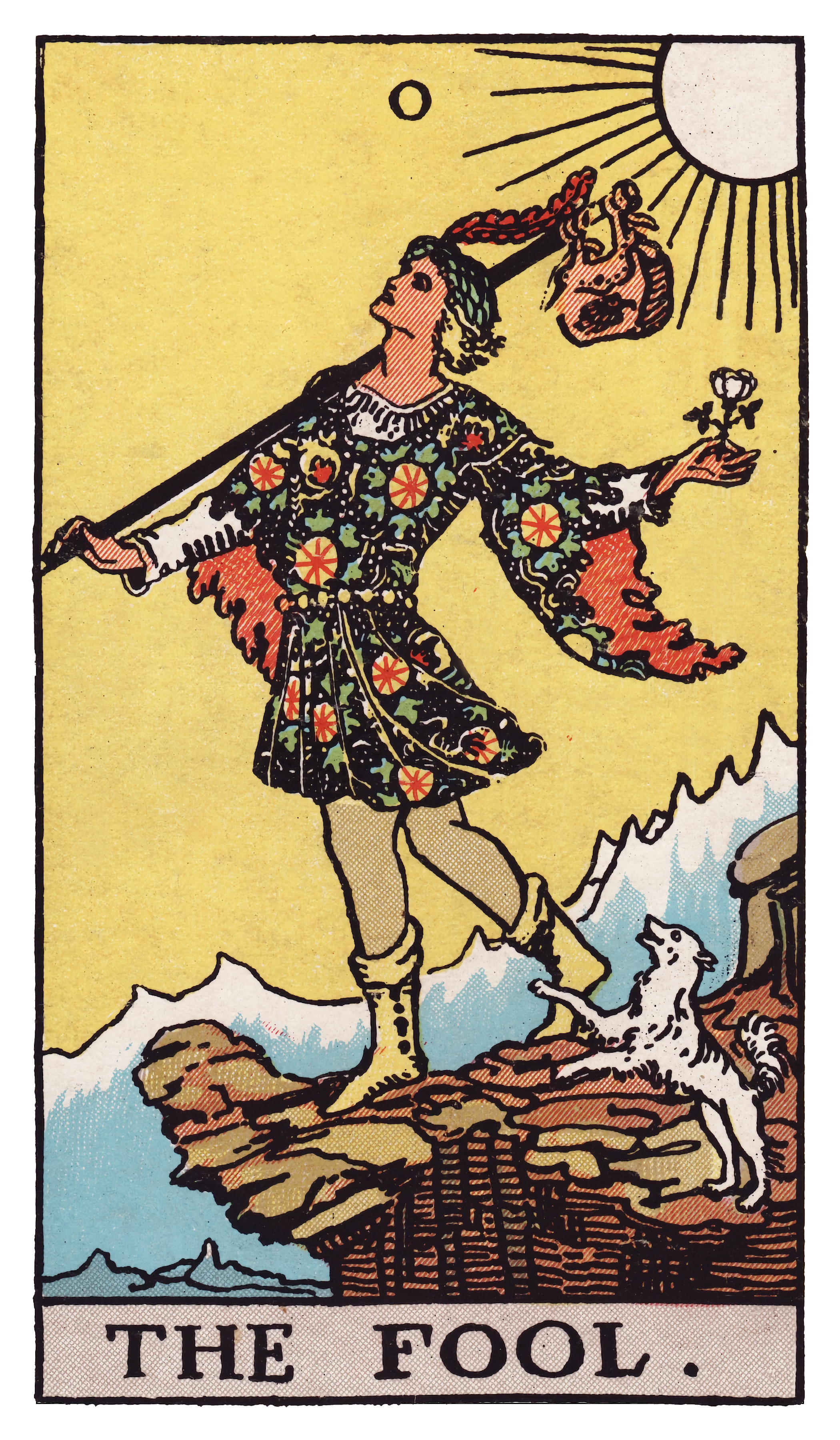
0. The FoolNew beginnings. The start of something. Innocence, a leap of faith, the willingness to begin without knowing exactly where the road leads.

I. The MagicianManifestation. You already have what you need. This card speaks to willpower, resourcefulness, and the ability to turn intention into action.

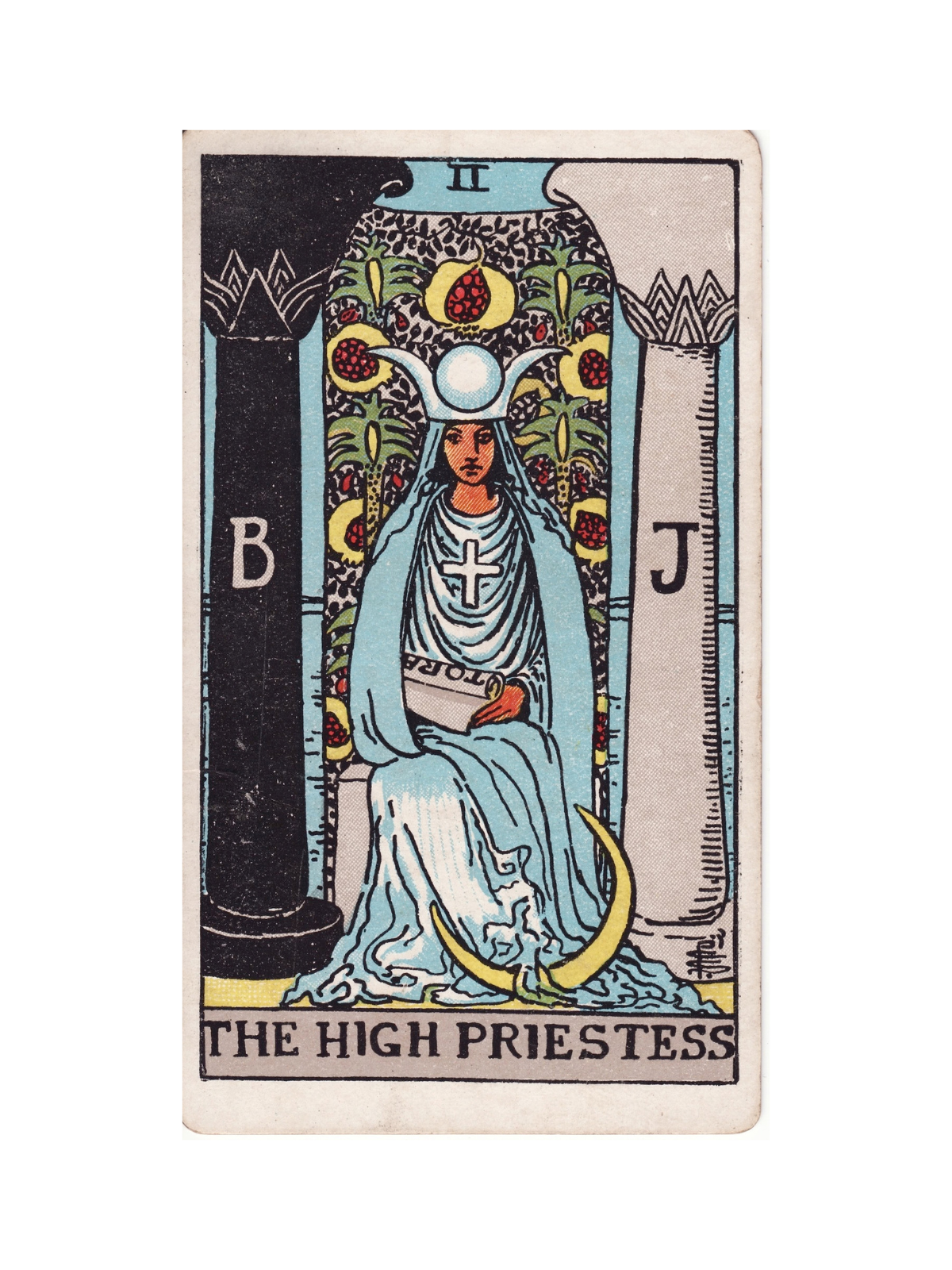
II. The High PriestessKnowing. A call inward. Intuition, mystery, and the wisdom that comes from listening rather than chasing answers.

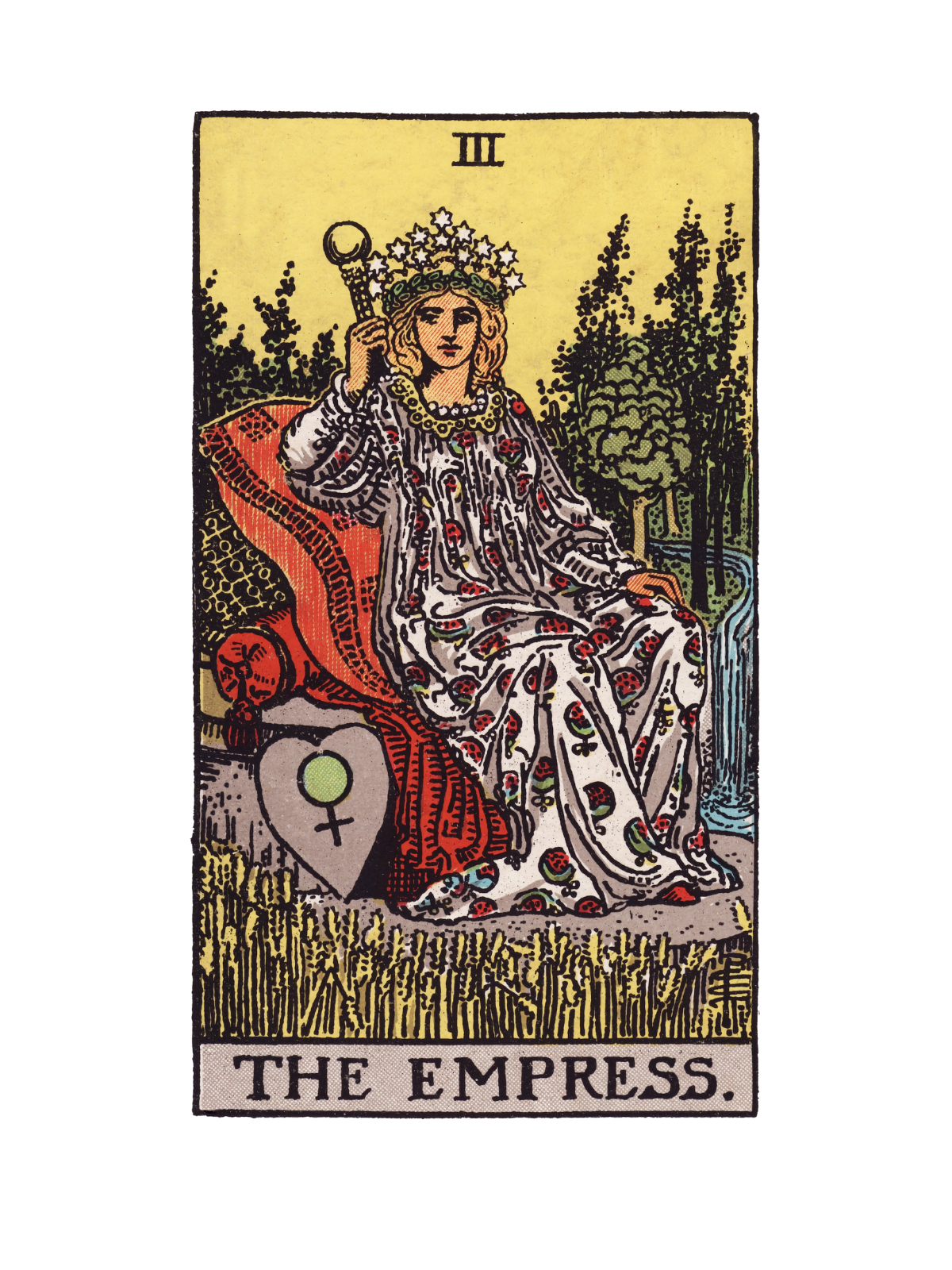
III. The EmpressAbundance. Creativity, fertility in every sense of the word, and a deep connection to the natural world.

IV. The EmperorAuthority. Structure and stability. This card asks you to lead, to build something solid, to take responsibility.

V. The HierophantTradition. Belief and learning. Often points to institutions, mentors, or the value of those who came before you.

VI. The LoversUnion. Choice and alignment. Not always romantic, this card is fundamentally about the joining of two things into one.

VII. The ChariotWillpower. Determination and drive, the discipline it takes to move forward through conflicting forces.

VIII. StrengthCourage. Not brute force, but patience, compassion, and the gentle taming of our own inner wildness.

IX. The HermitIntrospection. Withdrawal for the sake of clarity. Solitude and the search for your own inner light.

X. Wheel of FortuneCycles. Change and turning points. A reminder that life moves and that nothing stays fixed forever.

XI. JusticeTruth. Cause and effect. Fairness, and the consequences of our choices finally coming due.

XII. The Hanged ManSurrender. A pause. A new perspective, the wisdom that sometimes comes only from letting go of control.

XIII. DeathTransformation. An ending that makes room for something else. Release, and the closing of a chapter so a new one can begin.

XIV. TemperanceBalance. Patience and moderation, the slow blending of opposites into something harmonious.

XV. The DevilBondage. Attachment and temptation, the parts of ourselves we haven’t yet looked at directly.

XVI. The TowerUpheaval. The collapse of what was never built on solid ground often follows real clarity.

XVII. The StarHope. Renewal and faith, a quiet sense that things are beginning to mend.

XVIII. The MoonIllusion. The realm of the subconscious. Intuition, and the things that only become clear once we stop demanding logic from them.

XIX. The SunJoy. Vitality and confidence, a return to warmth after a long stretch in the dark.

XX. JudgementAwakening. A reckoning. Reflection on the past, and a calling toward whatever comes next.

XXI. The WorldCompletion. Wholeness and fulfillment, the satisfaction of a long journey finally coming full circle.

In the weeks ahead, I’ll be giving each of these twenty-two cards its own dedicated post, with more of the imagery, symbolism, and personal reading experience there simply isn’t room for here. Consider this list your map. The deeper conversations are coming.

The Major Arcana isn’t twenty-two separate ideas to memorize. It’s one long, spiraling story about becoming, one we move through again and again throughout our lives rather than just once. So when you see a Major Arcana card in your own reading, try asking where in the Fool’s Journey it sits. Are you near the beginning, full of potential like The Fool or The Magician? In the middle of the harder lessons, somewhere around The Devil or The Tower? Or closer to the end, settling into the wisdom of The Star, The Sun, or The World? That question alone will tell you more about your reading than any keyword list ever could.

Next time, we’ll turn to the other half of the deck. I’ll walk you through the Minor Arcana, suit by suit, so you can see how the daily details of Cups, Pentacles, Swords, and Wands fill in the texture beneath these bigger Major Arcana lessons.

Kim’s Esoteric Tarot Journals

Tarot card circle showing The Fool's Journey wit watercolor flowers .

Welcome Back to Kim’s Esoteric Tarot Journal

A Summer Solstice Tarot Reflection

The Summer Solstice is one of the most sacred and energetically charged moments on the wheel of the year. Arriving on June 21, 2026, it marks the point at which the sun reaches its highest and most powerful position in the sky, pouring its light and warmth upon the earth with a fullness that will not come again until another year has turned.

Across centuries and cultures, the Summer Solstice has been honored as a time of peak solar energy, abundance, and divine fire. Ancient peoples built stone circles, lit bonfires on hilltops, and gathered in ceremony to celebrate the sun at its zenith. From Stonehenge to the pyramids of Egypt, from the Norse celebration of Midsommar to the Slavic feast of Ivan Kupala, human beings have always understood that this moment carries something extraordinary. The sun is not merely a physical body. It is a symbol of consciousness, of the life force that animates everything, of the light we carry within ourselves.

Spiritually, the Summer Solstice is associated with full awakening. If the Winter Solstice represents the seed planted in darkness, the Summer Solstice is the flower in full bloom. It is the moment when what has been growing within us stands fully revealed in the light. Nothing is hidden. Everything is illuminated. This is why so many spiritual traditions associate the Solstice with truth, clarity, and the courage to be seen.

It is also, paradoxically, a moment of surrender. The sun reaches its peak and then, almost immediately, begins its slow return toward darkness. The Solstice teaches us that even at our most brilliant, even when we are shining most fully, there is a natural turning point. There is wisdom in knowing when to let go of striving and simply rest in what has been created. This is not defeat. It is the sacred rhythm of all living things.

And honestly? It feels like the perfect time to return to writing here. This year, the Hanged Man kept finding me in readings, a card I once viewed with unease, and I finally started listening to what it was trying to tell me. The Hanged Man doesn’t speak of defeat. He speaks of surrender, of willingly stepping back to gain a perspective you simply cannot find while rushing forward. That’s exactly what this past season has felt like for me, and why returning to this space now feels so right.

Looking Back Before Moving Forward

Can you believe we’re already halfway through the year?

January arrived with big goals and fresh energy. Then life happened. Some plans moved forward beautifully. Others took unexpected detours. The Solstice gives us a natural moment to check in without judgment.

Ask yourself:

  • What have I accomplished since January?
  • What lessons have I learned?
  • What am I ready to leave behind?

Tarot is wonderful for exactly this kind of reflection. Sometimes the cards remind us we’ve made more progress than we’ve given ourselves credit for. Other times they gently reveal where we’re holding ourselves back. Either way, the conversation is always worth having.

The Hanged Man: A Card for This Moment

In the Rider Waite Smith tradition, the Hanged Man is depicted suspended upside down from a living tree, his expression calm and serene rather than distressed. He has chosen this position willingly. One leg is crossed behind the other, forming a figure four, a symbol of stability and groundedness even in an unconventional posture. A halo of light surrounds his head, suggesting illumination gained through stillness.

The Hanged Man is numbered 12 in the Major Arcana, placing him between Justice and Death, two cards deeply concerned with truth and transformation. His position in the deck is no accident. He is the necessary pause before profound change.

When the Hanged Man appears in a reading, he is rarely asking you to struggle harder or move faster. He is inviting you to do the opposite. To wait. To observe. To release the need to control outcomes. The wisdom he offers is this: sometimes the most powerful thing you can do is nothing at all, and trust that clarity will come.

At the Summer Solstice, when the sun holds its breath at the peak of the sky before beginning its slow return, the Hanged Man feels especially relevant. Both ask us to honor the pause. Both remind us that stillness is not stagnation. It is preparation.

A Simple Summer Solstice Spread

Try this three-card pull to connect with the Solstice energy:

  • Card One: What Has Blossomed? Growth and wins from the first half of the year.
  • Card Two: What Needs Releasing? Habits, fears, or beliefs keeping you stuck.
  • Card Three: Where Should I Focus Next? Guidance and opportunities for the months ahead.

Take your time. Sometimes the message arrives instantly. Other times it unfolds over a day or two.

When the Cards Challenge You

Not every reading brings comfortable cards, and that’s okay.

A difficult card isn’t a punishment. It’s simply pointing to something that needs attention, healing, or a fresh perspective. Some of my most valuable readings have been the ones that challenged me most. The Hanged Man himself is proof of that. On the surface he looks like a card of being stuck. Look deeper, and he is one of the most spiritually rich cards in the entire deck.

The cards aren’t here to judge us. They’re here to help us grow.

A Few Journaling Prompts to Close

After your reading, sit with these:

  • Which card felt most significant, and why?
  • What am I being encouraged to release?
  • Where in my life might the Hanged Man’s wisdom apply right now?
  • What one action can I take this week to move forward?

Even a few honest sentences in your journal can become something meaningful to look back on.

The Second Half Is Still Unwritten

No matter what the first six months have looked like, you have the opportunity to shape what comes next. The light is at its peak. The Hanged Man reminds us to breathe it in before we move.

I’m so glad to be back sharing this space with you. Whether you’ve been here for years or just found your way here, thank you for being part of this community.

How are you honoring the Summer Solstice this year? I’d love to hear in the comments.

Blessings,
Kim
Kim’s Esoteric Tarot Journals

The STAR – Hope and Possibilities

The Star card signals hope and possibilities. Something that we are in desperate need of during this pandemic. We are all forced globally to deal with the COVID 19 virus threat and the impact it may have on ourselves, family members and friends if contracted. For those who serve as first line responders such as law enforcement officers, deputies, state troopers, deputies, federal agents, school resource officers,emergency medical technicians, paramedics, rescuers, firefighters, military personnel, sanitation workers, public works, grocery store clerks, liquor store workers, metro transit personnel, and any other person who heads out of the safety of their homes to provide a service I salute you. The COVID 19 virus does not discriminate based on social economic status and so we are all in this together.

So where does the power of the STAR tarot card come in? During stressful times which may be prolonged; its important to remain hopeful and focus on all of the possibilities that your life has to offer. Although sometimes the days may seem dark it is important to remain calm and stay focused on your well being.  Set your mind on any goals that you may have and if If you don’t have any goals, this would be a good time to identify some. Many people have lost their jobs and may be having difficulty making ends meet. The STAR card asks that you stay calm, remain hopeful and consider any possibilities that may be available to you such as unemployment, food banks, 401k withdrawals, and personal loans from family and friends. During this time, it’s important to have faith and trust that a new day will dawn and things will eventually return to normal.
I hope that everyone stays safe! What are you thoughts on the STAR card?

The Major and Minor Arcana in Love and Relationship Tarot Readings

Hello my faithful readers. I just read a wonderful blog by Lisa Frideborg of Love Dove Tarot. In this particular blog, Lisa provides insight in to the roles that the Major and Minor arcana tarot cards play in love and relationship readings. Enjoy!

Pamela Colman Smith 1903 – The Green Sheaf

Another wonderful article regarding Pamela Coleman Smith illustrator of the Rider Waite Tarot Deck. Thank You Mary K. Greer!

Mary K. Greer's avatarMary K. Greer's Tarot Blog

I just had to add this additional piece from The Reader: An Illustrated Monthly Magazine, September, 1903, p. 331-332. (note: date corrected).

PCS-1904 The Reader Magazine

MISS Pamela Coleman Smith was born of American parents in London, where her father was at the time engaged in business. On both sides her forebears exhibited in some degree the tendencies which have brought Miss Smith to the front in literary and artistic circles. One may say that from her mother she derived an intense, individual creative desire, which very early in life began to satisfy itself in a curious sort of drawing, later developed into the style already so well known, especially in England. While she was still a child the family removed to the island of Jamaica, where she lived seven years. During the time her chief diversion, outside her drawing, was learning the West Indian negro folk-tales. A volume of this folk-lore was…

View original post 398 more words

Pamela Colman Smith 1912 – correspondences

Mary K. Greer's avatarMary K. Greer's Tarot Blog

With these later news articles it becomes apparent how much of Pamela Colman Smith’s work has been lost. We find a tendency among the reporters to “damn with faint praise” as Pixie moves out of the realm of neighborhood parlour entertainment and begins to be taken seriously by people like Alfred Stieglitz—always dangerous for a woman of the time. I’ve placed Pixie’s paintings-to-music here rather than in my 1907 post (when she began exhibiting them) because these news articles are more slanted toward her musical works. See also this article in Current Literature on “Pictured Music.”

Stieglitz purchased quite a few of Pixie’s paintings, which Georgia O’Keefe sold off separately soon after he died—despite his desire, stated in his will, to keep them together—amid some speculation that a decades-old jealousy was involved. The Delaware Art Museum has a few in of her works in their collection and produced an exhibit in 1975 curated by Melinda Boyd Parsons (she wrote the catalog and…

View original post 1,631 more words

Pamela Colman Smith 1907 – story teller

Mary K. Greer's avatarMary K. Greer's Tarot Blog

“Once in a long before time before Queen Victoria came to reign over we . . .”

This post features newspaper articles from Pixie’s 1907 visit to New York where she concentrated on presenting her Jamaican folk tales along with recitations of old English ballads and poetry by Yeats. Waite made it clear that “one other” had helped in the creation of the Tarot deck and from the accounts in these papers it is clear that she knew Yeats well. Separately I’ve learned that around this time she performed some recitals with Florence Farr, who taught Tarot to Golden Dawn initiates.

Pamela Colman Smith portrait-large

“never in the least bound down by the traditions”
Sat., Jan. 12, 1907

Miss Pamela Colman Smith, some of whose very interesting pictures are now being exhibited across the river, at 291 Fifth avenue, has recently returned to this country, after several years spent in England. Miss Smith had a…

View original post 1,275 more words

Pamela Colman Smith: “out of the heart of the Heights”

Mary K. Greer's avatarMary K. Greer's Tarot Blog

“She has always been strange. There is not a page of her life, not an incident, that is not overflowing with romance.”

Pamela Smith in Private Live 1904

I’ve just discovered a lengthy article about Pamela Colman Smith in The Brooklyn Daily Eagle. New York, Tuesday, November 1, 1904. It gives many details of her large Brooklyn family (much of which I’ve left out) and describes her in terms of a hometown girl. Accompanying the article was this photograph of PCS as a very young girl.

“Winsome Witchery in London Drawing Rooms”

“Remarkable Success of a Height Girl in folk-Lore Tales”
“A Remarkable Personality”
“Pamela Coleman Smith, Closely Related to Many Prominent Brooklyn Families, and Her Strange Career”

In London drawing rooms the enthusiasm and the fashion of the hour is Pamela Coleman[sic] Smith, who, in a brilliant frock of orange with a red turban, sits on a board with two lighted candles in front of her and…

View original post 1,296 more words

The Grave of Arthur Edward Waite

Mary K. Greer's avatarMary K. Greer's Tarot Blog

Waite's grave

Waite__1910Many people have been incensed by the lack of a known grave for Pamela Colman Smith, artist of the Rider-Waite-Smith Tarot. But how many people have made pilgrimage to the gravesite of Arthur Edward Waite? Please let us know if you have. It turns out that Waite lived in his later years and died not far from where Pixie Smith drew many of the cards for their mutual deck. For those who are interested go HERE for the location and some pictures of his grave. At least you can have a virtual look at the place where he was buried. Photo by Julia&Keld

ADDED: On the end of Waite’s grave are the words “Est Una Sola Res.” Someone asked me what these words meant. “There is only One Thing.” But, I’ll let Waite himself explain his understanding of this phrase, from his book The Hidden Church of the Holy Grail, published the same year as…

View original post 290 more words