
Category Archives: Major Arcana

Strength Tarot Card Meaning: Courage with a Gentle Heart

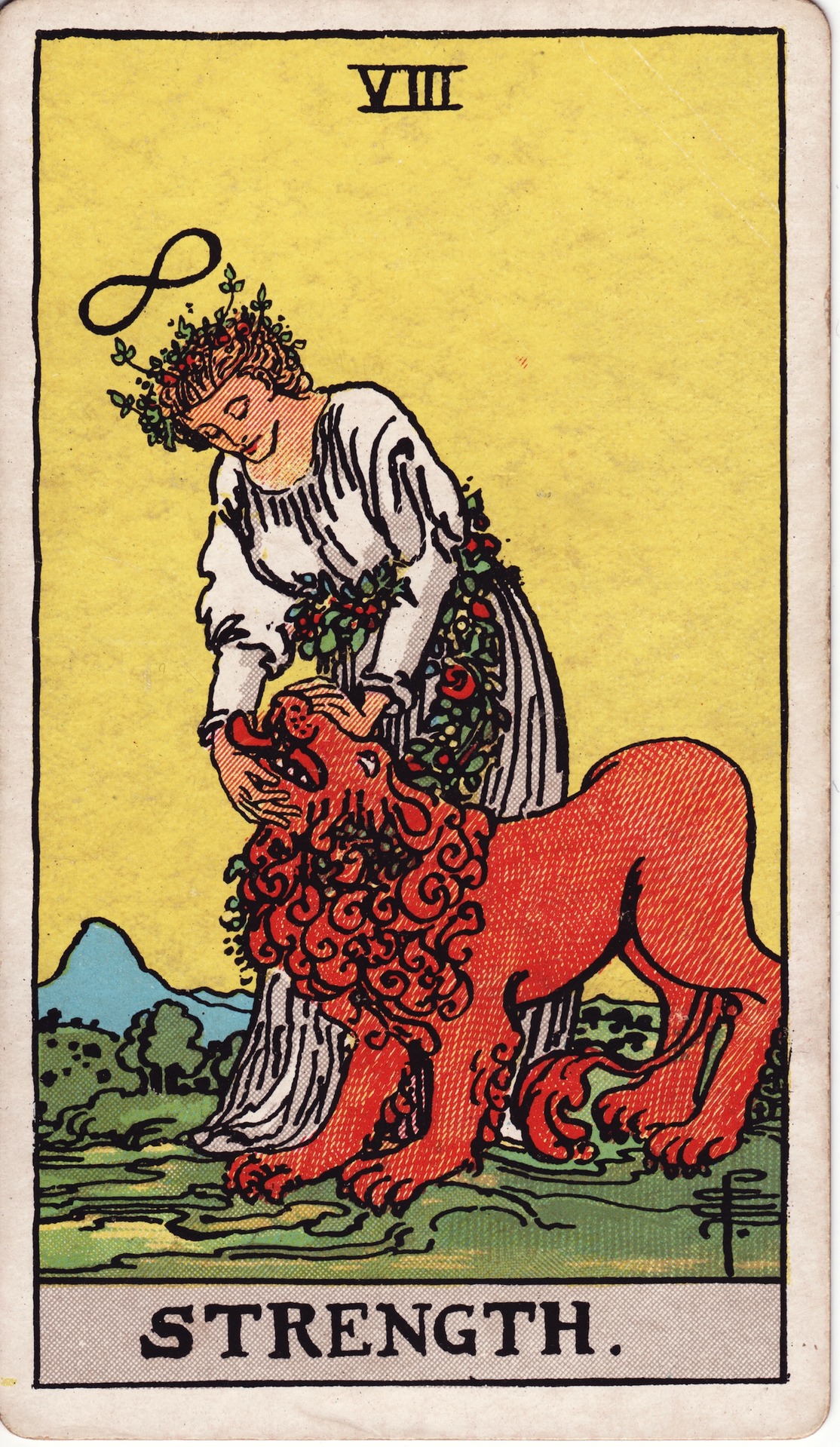
Strength tarot card showing a woman in a white gown gently holding a lion’s jaws, with an infinity symbol above her head and mountains in the background.
The Strength tarot card represents inner courage, patience, and the power of compassion.

Strength, card 8 of the Major Arcana. Courage, patience, and the quiet power of a gentle heart.

This post continues our journey through the Major Arcana, one card at a time. If you have not read the Major Arcana overview yet, that is a good place to start before diving into individual cards. So far, The Fool has stepped into the unknown, The Magician has discovered his tools, The High Priestess has taught us to listen within, The Empress has shown us how to nurture growth, The Emperor has built structure that lasts, The Hierophant has taught us to learn from others, and The Lovers asked us to make a choice from the heart. Most recently, The Chariot turned that choice into action. Now we arrive at card eight, Strength, where we learn that the greatest power is not the kind that pushes. As always, everything here follows the Rider-Waite tarot.

The Card at a Glance

  • Number: 8
  • Keywords: Inner strength, courage, patience, compassion, self-control, gentleness, resilience
  • Element: Fire
  • Reversed Keywords: Self-doubt, low energy, fear, insecurity, losing your temper, raw emotion
  • Yes or No: Yes

What You See in the Card

A woman dressed in a simple white gown stands beside a large golden lion. She rests her hands gently on the lion’s head and jaw, and the lion does not fight her. Its tail is tucked low, and it seems calm, almost content. A garland of flowers circles her waist and crowns her hair, and part of that chain drapes over the lion. Floating above her head is the infinity symbol. Behind them, a bright yellow sky stretches over green, rolling land, with a single blue mountain rising in the distance.

After the armor, stone, and forward motion of The Chariot, Strength feels peaceful. There is no weapon here, no shield, and no struggle. At first glance, it looks like a card about taming a wild animal. Look a little longer, and you start to see it is really a card about taming something inside of us: fear, anger, and impulse, met not with force but with patience and love.

The Symbolism, Piece by Piece

The lion. In Part 5 of my Tarot Symbolism Series on animals, the lion speaks to courage, pride, power, and raw instinct. In this card, the lion stands for the wild parts of ourselves: our passions, our fears, our tempers, and our deepest desires. These forces are not bad. They are part of being alive. The question Strength asks is whether we let them run our lives or learn to work with them.

Her gentle hands. The woman does not pin the lion down or wrestle it into submission. She simply rests her hands on its jaw, calm and unafraid. In Part 3 of my Tarot Symbolism Series on direction and body language, posture and hand placement tell us how a figure meets the world. Her soft lean toward the lion shows trust, not threat. This is the heart of the card: true strength is calm, steady, and kind.

The infinity symbol. The figure eight floating above her head is called a lemniscate. If it looks familiar, that is because we first saw it above The Magician. In The Magician, it spoke to endless potential. Here, it speaks to endless patience. Inner strength is not something we earn once and keep forever. It is a practice we return to again and again.

The white gown. In the language of tarot colors, white speaks to purity, innocence, and spiritual clarity. The woman’s white gown shows that her power comes from a clean heart and good intentions. She does not need armor, because she is not trying to win a fight.

The flower garland. In Part 6 of my Tarot Symbolism Series on plants and flowers, flowers speak to beauty, growth, and the gentle forces of nature. The chain of flowers around her waist and draped over the lion links the two of them together. It suggests that her bond with the lion is built on love and harmony, not chains and force.

The yellow sky. Yellow speaks to optimism, confidence, and the warmth of the sun. The bright sky behind her fills the card with a sense of hope. Facing our inner lions does not have to be a dark or frightening experience. It can be a warm and even joyful kind of growth.

The distant mountain. The blue mountain in the background reminds us that challenges are still out there on the horizon. But it sits far behind her. The real work in this card is happening up close, in the quiet moment between the woman and the lion.

Why Eight Matters: The Numerology of Strength

In Part 1 of my Tarot Symbolism Series on numerology, the number eight carries the energy of power, mastery, balance, and personal strength. Eight is also a number of cycles. Turn it on its side, and it becomes the very same infinity symbol floating above the woman’s head. Eight reminds us that what we give out, we get back, and that real power flows both ways.

Strength embodies this beautifully. Its power is not the loud, outward kind. It is the balanced, inner kind that holds steady under pressure. In the Minor Arcana, the Eights often speak of movement, effort, and mastery through practice. Strength raises that energy to its highest form: mastery over ourselves.

You may notice that some decks place Strength at number eleven and Justice at number eight. That order comes from older traditions. The Rider-Waite tarot switched the two cards so their meanings would line up with their astrological signs. Strength is ruled by Leo, the sign of the lion, which is why we meet it here at card eight.

Strength Upright

When Strength appears upright in a reading, it is a reminder that you are stronger than you think. This card encourages you to face your challenges with courage, patience, and compassion. It favors staying calm under pressure, responding instead of reacting, and trusting that gentleness can move mountains.

Strength is the card of quiet bravery. It is the courage to keep going through a hard season, to hold your temper when someone pushes your buttons, or to sit with a difficult feeling instead of running from it. It can also point to healing, recovery, and the steady confidence that comes from knowing yourself well.

In some readings, Strength speaks to how you treat others. A situation may call for kindness rather than control, or for patience with someone who is struggling. Sometimes the strongest thing you can do is stay soft.

Strength Reversed

Reversed, Strength’s energy tends to show up in one of two ways, and your intuition along with the surrounding cards will help you sense which one applies. If you are still getting comfortable with reversals, my post on reading both sides of the card is a good companion to this section.

The first is self-doubt. This is Strength when the woman forgets her own power. It can point to fear, insecurity, low energy, or feeling too drained to face what is in front of you. You may be underestimating yourself or letting worry get the best of you. The reversed card often asks, “What would you do if you remembered how strong you really are?”

The second is the lion running loose. This is Strength when raw emotion takes over. It can point to anger, impatience, impulsive choices, or reacting before thinking. It may also show up as trying to control a situation through force instead of patience. Sometimes this card asks you to take a breath, slow down, and gently bring yourself back to center.

Strength in Love, Career, and Finances

Love

For someone single, Strength can point to growing confidence and self-love, which makes you ready to attract a healthy relationship. It may also signal a warm, passionate connection with someone who brings out the best in you. In an existing relationship, Strength speaks to patience, understanding, and working through challenges with compassion. Reversed, it may point to insecurity, jealousy, heated arguments, or a need to rebuild trust and self-worth.

Career

In career readings, Strength is a sign that your persistence will pay off. It favors steady effort, calm leadership, and handling difficult people or situations with grace. It can point to leading by example rather than by authority. Reversed, it may warn of burnout, self-doubt holding you back, or workplace tension that needs a cooler head.

Finances

Financially, Strength encourages discipline and patience. This is a card for resisting impulse purchases and staying the course with your goals. It reminds you that steady self-control builds lasting security. Reversed, it may caution against emotional spending or letting financial worry cloud your judgment.

Is Strength a Yes or No Card?

Upright, Strength is a yes. It is a positive card that favors success through courage, patience, and inner confidence. Its yes comes with a reminder to move forward calmly rather than forcefully.

Reversed, Strength leans toward no, or not yet. It suggests that fear, doubt, or strong emotions need some attention before you move ahead.

When Strength Shows Up in Your Reading

Because Strength is a Major Arcana card, its appearance signals that courage, patience, and inner balance are playing an important role in your situation. Pay attention to where it lands in a spread. In a past position, it may point to a challenge you have already faced and grown from. In a present position, it is time to trust your inner strength and meet what is in front of you with a steady heart. In a future or outcome position, you will have what it takes to see things through.

Here are a few questions to sit with when Strength comes up for you:

  • What inner lion am I being asked to face right now?
  • Where could patience and kindness accomplish more than force?
  • Am I giving myself credit for how strong I really am?
  • How can I respond, rather than react, to what is challenging me?

Final Thoughts

Strength reminds us that real power is gentle. After The Chariot shows us how to move forward with focus and will, Strength teaches us how to stay steady from the inside out. The woman does not defeat the lion. She befriends it. When this card appears, it invites you to meet your fears, your passions, and your challenges with courage and compassion, and to trust that a gentle heart can be the strongest force of all.

Ready to Find Your Inner Strength?

If you are facing a challenge and want some clarity and encouragement along the way, I would love to read for you. You can order a tarot card reading by email anytime. Also, please don’t forget to like, comment, share and subscribe!

Coming Up Next

Next time, we’ll meet The Hermit, card nine, and explore what it means to step back, turn inward, and find the light of your own wisdom.

Has Strength ever shown up when you needed courage the most? I’d love to hear about it in the comments. Don’t forget to like, share, and subscribe to follow along as we explore the tarot card meanings of the Major Arcana, one card at a time.

Never Miss a Card

Want to follow along as we walk through the rest of the Major Arcana? Subscribe to Kim’s Esoteric Tarot Journals and each new post will arrive in your inbox as soon as it goes live. It’s free, and you can unsubscribe anytime.

Kim’s Esoteric Tarot Journals

Tarot readings are intended for adults age 18 and older and are provided for entertainment and personal reflection. Tarot should not replace professional medical, legal, mental health, or financial advice.

© 2026 Kim’s Esoteric Tarot Journals. All rights reserved.
The Hierophant Tarot Card Meaning: Wisdom Passed Down

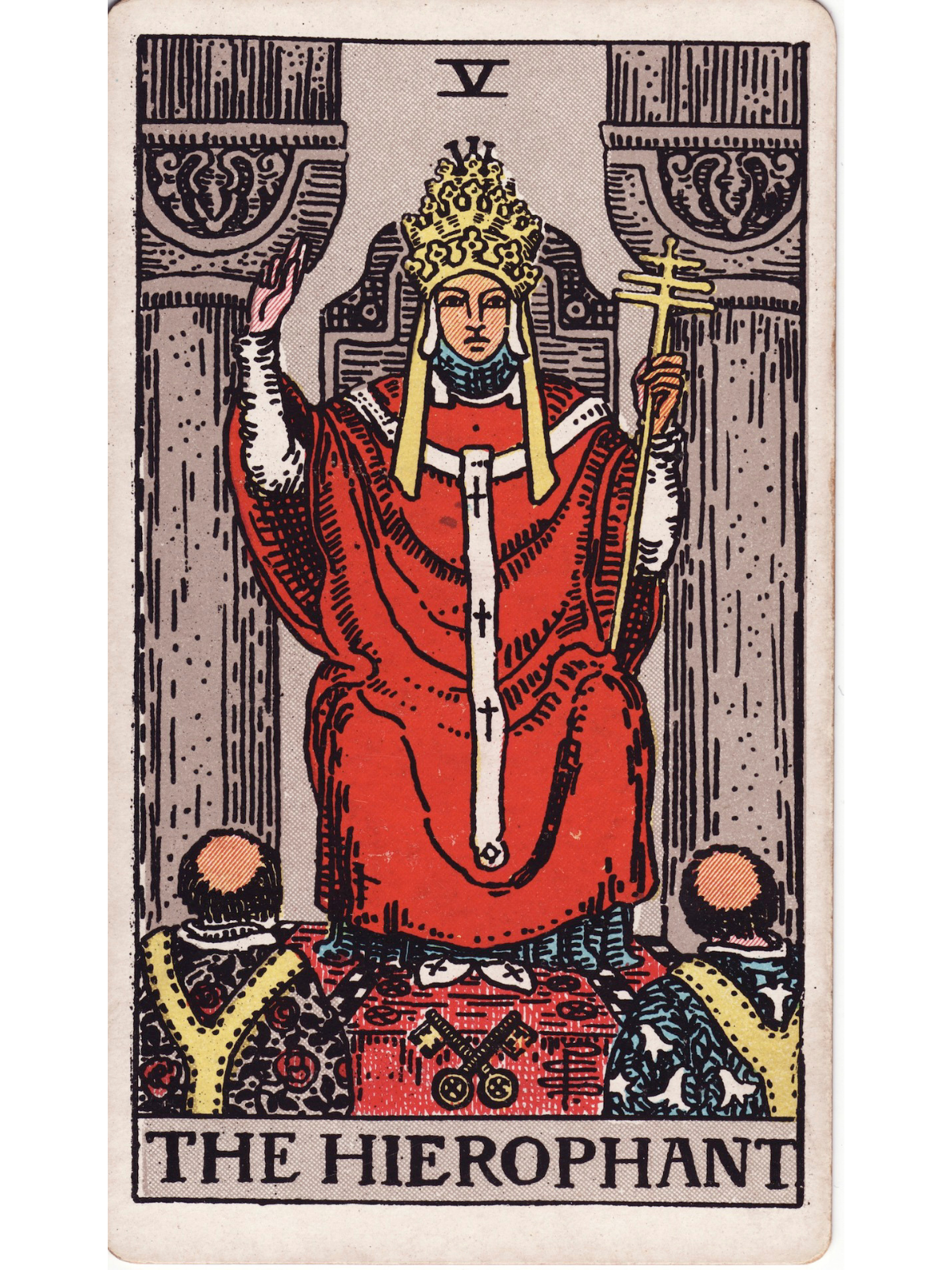
The Hierophant tarot card from the Rider–Waite–Smith deck, depicting a spiritual leader seated between two pillars, raising his hand in blessing before two kneeling followers. Symbolizing tradition, spiritual wisdom, guidance, and established beliefs.
The Hierophant (V) Tarot Card — A symbol of spiritual wisdom, sacred traditions, higher learning, and divine guidance from the classic Rider–Waite–Smith Tarot deck.

The Hierophant, card 5 of the Major Arcana. It represents tradition, spiritual teaching, and the wisdom we receive from those who came before us.

This post continues our journey through the Major Arcana, one card at a time. If you have not read the Major Arcana overview yet, that is a good place to start before diving into individual cards. So far, The Fool has stepped into the unknown, The Magician has discovered his tools, The High Priestess has taught us to listen within, and The Empress has shown us how to nurture growth. Most recently, The Emperor showed us how to build structure that lasts. Now we arrive at card five, The Hierophant, where the focus shifts from building our own world to learning from the wisdom of others. As always, everything here follows the Rider-Waite tarot.

The Card at a Glance

  • Number: 5
  • Keywords: Tradition, spiritual wisdom, teaching, mentorship, belief systems, community, ritual
  • Element: Earth
  • Reversed Keywords: Rebellion, rigid rules, questioning tradition, nonconformity, finding your own path
  • Yes or No: Yes

What You See in the Card

The Hierophant sits on a throne between two gray stone pillars, inside what looks like a temple. He wears a heavy red robe over blue and white garments, and on his head rests a tall triple crown. His right hand is raised in a gesture of blessing, with two fingers pointing up and two folded down. In his left hand, he holds a golden staff topped with a triple cross. At his feet lie two crossed keys, one gold and one silver. Kneeling before him are two figures with shaved heads, one wearing a robe decorated with red roses and the other with white lilies.

After the solitary strength of The Emperor, The Hierophant brings people back into the picture. He is not alone on his throne. He is teaching, blessing, and guiding others. At first glance, it looks like a card about religion and rules. Look a little longer, and you start to see it is really a card about how wisdom is shared and passed from one generation to the next.

The Symbolism, Piece by Piece

The two pillars. Like The High Priestess, The Hierophant sits between two pillars. This connection is no accident. The High Priestess guards hidden, inner knowledge that each of us must discover for ourselves. The Hierophant shares outer, spoken knowledge that is taught openly within a community. She is the mystic. He is the teacher.

The raised hand. In Part 3 of my Tarot Symbolism Series on direction and body language, gestures reveal a great deal about a card’s meaning. The Hierophant’s raised hand is a sign of blessing. The two fingers pointing up and two folded down are often read as a reminder of the connection between heaven and earth. He acts as a bridge between the sacred and the everyday.

The triple crown. In Part 9 of my Tarot Symbolism Series on clothing, crowns and headwear show rank and responsibility. The Hierophant’s triple crown is often read as representing three worlds or levels of being: the physical, the emotional, and the spiritual. His authority reaches beyond the material world The Emperor rules.

The triple cross staff. The golden staff in his left hand carries three crossbars, echoing his three-tiered crown. It is a symbol of spiritual authority and of the different levels of understanding a student passes through on the path of learning.

The crossed keys. The gold and silver keys at his feet are among the most important symbols in the card. Gold is often linked to the conscious mind and the sun, while silver is linked to the subconscious and the moon. Together, they unlock the doors to knowledge. The Hierophant holds the keys, but he lays them at his feet, ready to pass them on to those who are prepared to learn.

The red robe. In the language of tarot colors, red speaks to passion, devotion, and life force. The Hierophant’s red robe shows his deep commitment to what he teaches. The blue and white beneath it bring in truth and purity, the quieter wisdom underneath his outward role.

The kneeling figures. The two figures before him are his students or followers. They show that The Hierophant’s role only makes sense in relationship to others. A teacher needs students, and a tradition needs people to carry it forward.

The roses and lilies. One student’s robe is covered in red roses, and the other’s in white lilies. In Part 6 of my Tarot Symbolism Series on plants and flowers, roses speak to passion and desire, while lilies speak to purity and spiritual thought. You may remember both flowers from The Magician’s garden. Here they appear on the students, showing that wisdom must balance the heart and the spirit.

Why Five Matters: The Numerology of The Hierophant

In Part 1 of my Tarot Symbolism Series on numerology, the number five carries the energy of change, challenge, freedom, and movement. After the solid stability of Four, Five shakes things up. In the Minor Arcana, the Fives often show conflict, loss, or struggle, the moments when our comfortable structures are tested.

At first, this might seem like an odd fit for a card so focused on tradition. But it actually makes perfect sense. Five is the number of the human experience, with five senses and five fingers on each hand. It is the moment when we start asking bigger questions about life, meaning, and belief. The Hierophant answers that restlessness by offering guidance, teachings, and a framework that helps us make sense of the change around us.

The Hierophant also reminds us that tradition itself was once something new. Every belief system, ritual, and teaching began with someone asking questions. Five is the number of searching, and The Hierophant is the teacher who helps us search with purpose.

The Hierophant Upright

When The Hierophant appears upright in a reading, it often points to learning, guidance, and connecting with something larger than yourself. This card may suggest finding a mentor, joining a group or community, studying a subject in depth, or turning to a spiritual practice or belief system for support.

I often tell my clients that The Hierophant is permission to learn from others. In a world that celebrates doing everything on your own, it can be humbling to admit that someone else may already have walked the road ahead of you. The Hierophant reminds you that there is no shame in asking for guidance. Some lessons are meant to be passed down.

He can also point to traditional choices and milestones, such as marriage, formal education, ceremonies, or following an established path. In some readings, he may represent stepping into the role of teacher or mentor yourself.

The Hierophant Reversed

Reversed, The Hierophant’s energy tends to show up in one of two ways, and your intuition along with the surrounding cards will help you sense which one applies. If you are still getting comfortable with reversals, my post on reading both sides of the card is a good companion to this section.

The first is breaking away from tradition. This is the seeker who no longer fits within the rules or beliefs they were raised with. It can point to questioning old teachings, choosing an unconventional path, or finding your own spiritual truth. This is not always negative. Sometimes the reversed Hierophant simply asks, “Do these beliefs still belong to you?”

The second is rigid rules and blind conformity. This is tradition that has hardened into control. It can point to following rules without questioning them, staying in a group or institution that no longer serves you, or a teacher or leader who misuses their authority. It is a reminder that wisdom should help you grow, not keep you small.

The Hierophant in Love, Career, and Finances

Love

For someone single, The Hierophant can point to meeting someone through a community, school, place of worship, or shared tradition. It may also suggest that you are looking for a committed, traditional relationship. In an existing relationship, he often signals commitment, marriage, or shared values that strengthen the bond. Reversed, he can point to a relationship that does not follow the expected path, differences in values, or pressure to meet others’ expectations.

Career

In career readings, The Hierophant favors established organizations, education, training, and working within a clear structure. He is especially positive for teaching, counseling, ministry, law, government, and any field built on tradition or expertise. He may also point to a mentor who helps you grow. Reversed, he may suggest feeling boxed in by workplace rules or a desire to break away and do things your own way.

Finances

Financially, The Hierophant favors conservative, time-tested approaches. Think steady savings, trusted institutions, and advice from experienced professionals. This is not the card for trendy or risky schemes. Reversed, he may suggest exploring a less traditional approach to money, or caution against following financial advice without asking questions.

Is The Hierophant a Yes or No Card?

Upright, The Hierophant is a yes, especially when your question involves following an established path, seeking guidance, or making a traditional commitment. His yes comes with a reminder to lean on the wisdom and support of others.

Reversed, The Hierophant leans toward no, or more accurately, not in the expected way. He suggests that the traditional route may not be the right one for you, and that it may be time to find your own answer.

When The Hierophant Shows Up in Your Reading

Because The Hierophant is a Major Arcana card, his appearance signals that learning, belief, and community are playing an important role in your situation. Pay attention to where he lands in a spread. In a past position, he may point to the values and teachings you were raised with. In a present position, guidance or a teacher may be available to you now. In a future or outcome position, commitment, learning, or a meaningful tradition is on its way.

Here are a few questions to sit with when The Hierophant comes up for you:

  • Who are the teachers and mentors who have shaped my path?
  • Which of my beliefs truly belong to me, and which have I simply inherited?
  • Where could I benefit from guidance or community right now?
  • Is there wisdom I am ready to pass on to someone else?

Final Thoughts

The Hierophant reminds us that none of us walks this path completely alone. After The Emperor builds the structure of our world, The Hierophant fills it with meaning, connecting us to the teachings, traditions, and communities that came before us. When he appears, he invites you to seek wisdom from those who have gone ahead, to honor the beliefs that truly serve you, and to remember that one day, you may be the one holding the keys.

Seeking Guidance on Your Path?

If you are looking for insight and want a fresh perspective on the questions you are carrying, I would love to read for you. You can order a tarot card reading by email anytime. Also, please don’t forget to like follow, share and subscribe to follow along as we explore the tarot card meanings of the Major Arcana, one card at a time.

Coming Up Next

Next time, we’ll meet The Lovers, card six, and explore what it means to choose with your heart and live in alignment with your values.

Has The Hierophant ever shown up when you were searching for guidance? I’d love to hear about it in the comments.

Kim’s Esoteric Tarot Journals

Tarot readings are intended for adults aged 18 and older and are provided for entertainment and personal reflection. Tarot should not replace professional medical, legal, mental health, or financial advice.

© 2026 Kim’s Esoteric Tarot Journals. All rights reserved.
The Emperor Tarot Card Meaning: Building Structure That Lasts

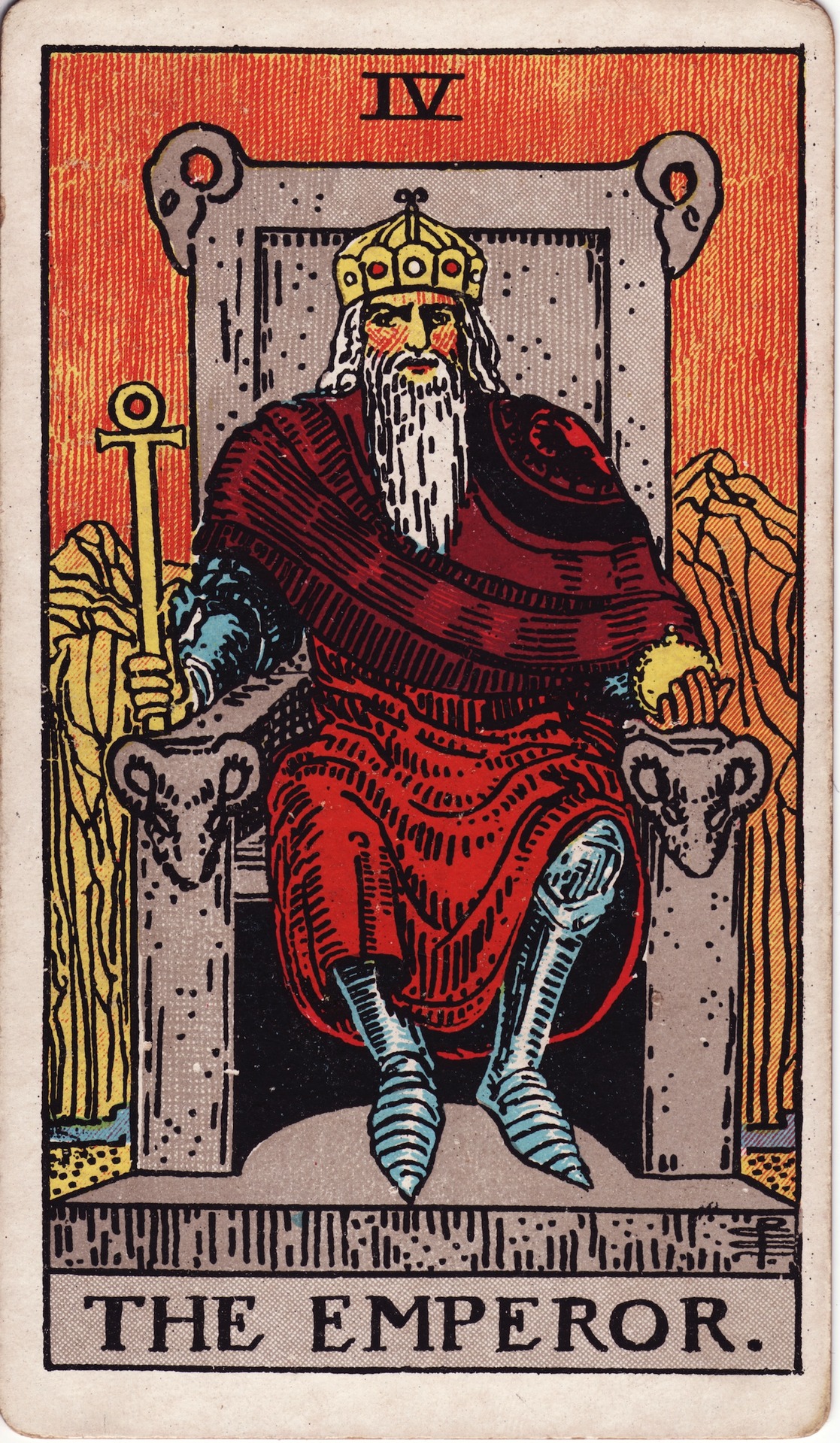
The Emperor, card 4 of the Major Arcana. It represents authority, stability, and the strength to build a solid foundation.

The Emperor tarot card from the Rider-Waite-Smith deck symbolizes authority, stability, leadership, structure, and the importance of establishing strong foundations and maintaining control over one's life.
The Emperor (IV) of the Rider-Waite-Smith Tarot represents authority, leadership, stability, and the power of structure and discipline.

This post continues our journey through the Major Arcana, one card at a time. If you have not read the Major Arcana overview yet, that is a good place to start before diving into individual cards. So far, The Fool has stepped into the unknown, The Magician has discovered his tools, and The High Priestess has taught us to listen within. Most recently, The Empress showed us how to nurture life and let abundance grow. Now we arrive at card four, The Emperor, who asks a different question: once something has grown, how do we protect it and help it last? As always, everything here follows the Rider-Waite tarot.

The Card at a Glance

  • Number: 4
  • Keywords: Authority, structure, stability, leadership, protection, discipline, father figure
  • Element: Fire
  • Reversed Keywords: Rigidity, control, domination, lack of discipline, misuse of power
  • Yes or No: Yes

What You See in the Card

The Emperor sits upright on a large stone throne, carved with the heads of four rams. He wears a deep red robe, and beneath it, you can see a suit of armor covering his legs. A golden crown rests on his head, and he has a long white beard. In his right hand he holds a scepter topped with an ankh, and in his left hand he holds a golden orb. Behind him, rugged orange mountains rise against a bright orange sky, and at their base, a small stream runs quietly by.

After the lush, flowing garden of The Empress, The Emperor’s world feels very different. There are no soft cushions or wheat fields here. Everything is solid, firm, and built to stand. At first glance, it looks like a card about power and control. Look a little longer, and you start to see it is really a card about responsibility: the strength it takes to create order and protect what matters.

The Symbolism, Piece by Piece

The stone throne. His throne is made of solid stone, not soft fabric. Stone represents permanence, strength, and endurance. The Emperor builds things that last. Where The Empress rests on cushions, The Emperor sits on a foundation that will not move.

The ram heads. The four ram heads carved into his throne connect The Emperor to Aries, the zodiac sign he rules. In Part 5 of my Tarot Symbolism Series on animals, the ram speaks to courage, determination, and forward drive. Aries is the first sign of the zodiac, a natural leader who charges ahead. The Emperor carries that same bold, pioneering energy.

The red robe. In the language of tarot colors, red speaks to passion, action, and life force. The Emperor’s red robe shows his energy and drive. Interestingly, The Empress rested on red cushions, while The Emperor wears red as his outer layer. Her passion is in her comfort. His is in his action.

The armor. Beneath his robe, The Emperor wears armor. He is ready to defend what he has built. This tells us that his leadership is not only about making rules. It is also about protection. He is the guardian who stands between his people and harm.

The ankh scepter. The scepter in his right hand is topped with an ankh, the ancient Egyptian symbol of life. This is a beautiful detail. Even the most powerful ruler serves life. His authority is meant to protect and sustain, not to dominate.

The golden orb. The orb in his left hand represents the world he governs. It shows his responsibility over his domain, whether that is a kingdom, a family, a business, or his own life. He holds it firmly and steadily.

The barren mountains. The rugged mountains behind him show strength and determination, but they also reveal something important: very little grows there. This is a reminder that structure without warmth can become harsh. The Emperor needs the softness of The Empress, just as she needs his strength.

The small stream. At the base of the mountains, a small stream flows. It is easy to miss, but it matters. It suggests that even beneath The Emperor’s firm exterior, there is still emotion and feeling. He may not show it openly, but it is there.

Why Four Matters: The Numerology of The Emperor

In Part 1 of my Tarot Symbolism Series on numerology, the number four carries the energy of stability, structure, foundation, and order. Where Three is creative growth, Four is what happens when that growth is given a solid shape. Think of the four corners of a house, the four legs of a table, or the four seasons of the year. Four is the number of things that stand firm.

The Emperor embodies this completely. The Empress gives life to new things, and The Emperor gives them structure so they can survive. In the Minor Arcana, the Fours often speak of stability, rest, security, and holding on. The Emperor raises that energy to its strongest form.

Four is also connected to the four elements. In Part 7 of my Tarot Symbolism Series on the four elements, we see how Earth, Air, Fire, and Water work together to create balance. The Emperor is ruled by Fire, the element of will and action, but his number reminds us that true stability comes when all four are in their proper place.

The Emperor Upright

When The Emperor appears upright in a reading, it is time to bring order and structure into your life. This card encourages you to set clear goals, make a plan, create boundaries, and take charge of your situation. It favors discipline, responsibility, and steady effort over impulse.

The Emperor signals permission to lead. Many people hesitate to step into their own authority, worried that they will seem too bossy or demanding. The Emperor reminds you that there is nothing wrong with taking control of your own life, setting firm boundaries, and expecting others to respect them.

He can also point to a strong, protective figure in your life, often a father, mentor, boss, or someone in a position of authority. In some readings, he may represent stepping into that role yourself.

The Emperor Reversed

Reversed, The Emperor’s energy tends to show up in one of two ways, and your intuition along with the surrounding cards will help you sense which one applies. If you are still getting comfortable with reversals, my post on reading both sides of the card is a good companion to this section.

The first is too much control. This is The Emperor who becomes rigid, stubborn, or domineering. It can point to someone who uses their power to control others, refuses to bend, or insists on having everything their way. It can also show up within yourself as perfectionism or an inability to let go. The reversed Emperor often asks, “What are you holding onto so tightly?”

The second is too little structure. This is The Emperor who has left his throne. It can point to a lack of discipline, disorganization, or avoiding responsibility. Things may feel chaotic, and no one seems to be steering the ship. Sometimes this card asks you to step up and take the lead that is missing.

The Emperor in Love, Career, and Finances

Love

For someone single, The Emperor can point to meeting someone stable, mature, and dependable, or to a time when you are looking for security in a relationship. In an existing relationship, he signals commitment, loyalty, and a partner who provides protection and support. He favors relationships built on mutual respect and clear expectations. Reversed, he can point to a controlling or rigid partner, power struggles, or a relationship that feels more like a set of rules than a partnership.

Career

In career readings, The Emperor is a strong sign of leadership, promotion, authority, and success through hard work and discipline. He favors structured environments, management roles, government work, and building or running your own business. He may also point to a supportive boss or mentor. Reversed, he may warn of a controlling manager, workplace power struggles, or a need to bring more organization into your work.

Finances

Financially, The Emperor is a card of stability and smart planning. He encourages budgets, long-term strategies, and building a strong financial foundation. This is not the card for risky bets. It is the card for steady, disciplined growth. Reversed, he may caution against poor money management, lack of planning, or letting someone else control your finances.

Is The Emperor a Yes or No Card?

Upright, The Emperor is a yes. He is a strong, stable card that favors success through planning, effort, and leadership. His yes comes with a reminder to approach things with structure and discipline rather than impulse.

Reversed, The Emperor leans toward no. He suggests that something is out of balance, whether that is too much control or too little order, and needs to be addressed before moving forward.

When The Emperor Shows Up in Your Reading

Because The Emperor is a Major Arcana card, his appearance signals that structure, leadership, and responsibility are playing an important role in your situation. Pay attention to where he lands in a spread. In a past position, he may point to a strong authority figure or a foundation that was built earlier. In a present position, it is time to take charge and create order. In a future or outcome position, stability and success are on their way, especially through steady effort.

Here are a few questions to sit with when The Emperor comes up for you:

  • Where in my life do I need more structure or discipline?
  • Am I stepping into my own authority, or waiting for someone else to lead?
  • What boundaries do I need to set or strengthen?
  • Is my need for control helping me, or holding me back?

Final Thoughts

The Emperor reminds us that strength and structure are forms of love too. After The Empress helps life grow, The Emperor builds the walls that protect it and the foundation that helps it last. His power is meant to serve, not to rule over others. When he appears, he invites you to step into your own authority, create order in your life, and build something that will stand the test of time.

Ready to Build Your Foundation?

If you are ready to take charge of your path and want some clarity on your next steps, I would love to read for you. You can order a tarot card reading by email anytime. Don’t forget to like, share, and subscribe to follow along as we explore the tarot card meanings of the Major Arcana, one card at a time.

Coming Up Next

Next time, we’ll meet The Hierophant, card five, and explore what it means to seek wisdom through tradition, teachers, and shared beliefs.

Has The Emperor ever shown up when you needed to take charge of your life? I’d love to hear about it in the comments.

Kim’s Esoteric Tarot Journals

Tarot readings are intended for adults age 18 and older and are provided for entertainment and personal reflection. Tarot should not replace professional medical, legal, mental health, or financial advice.

© 2026 Kim’s Esoteric Tarot Journals. All rights reserved.