
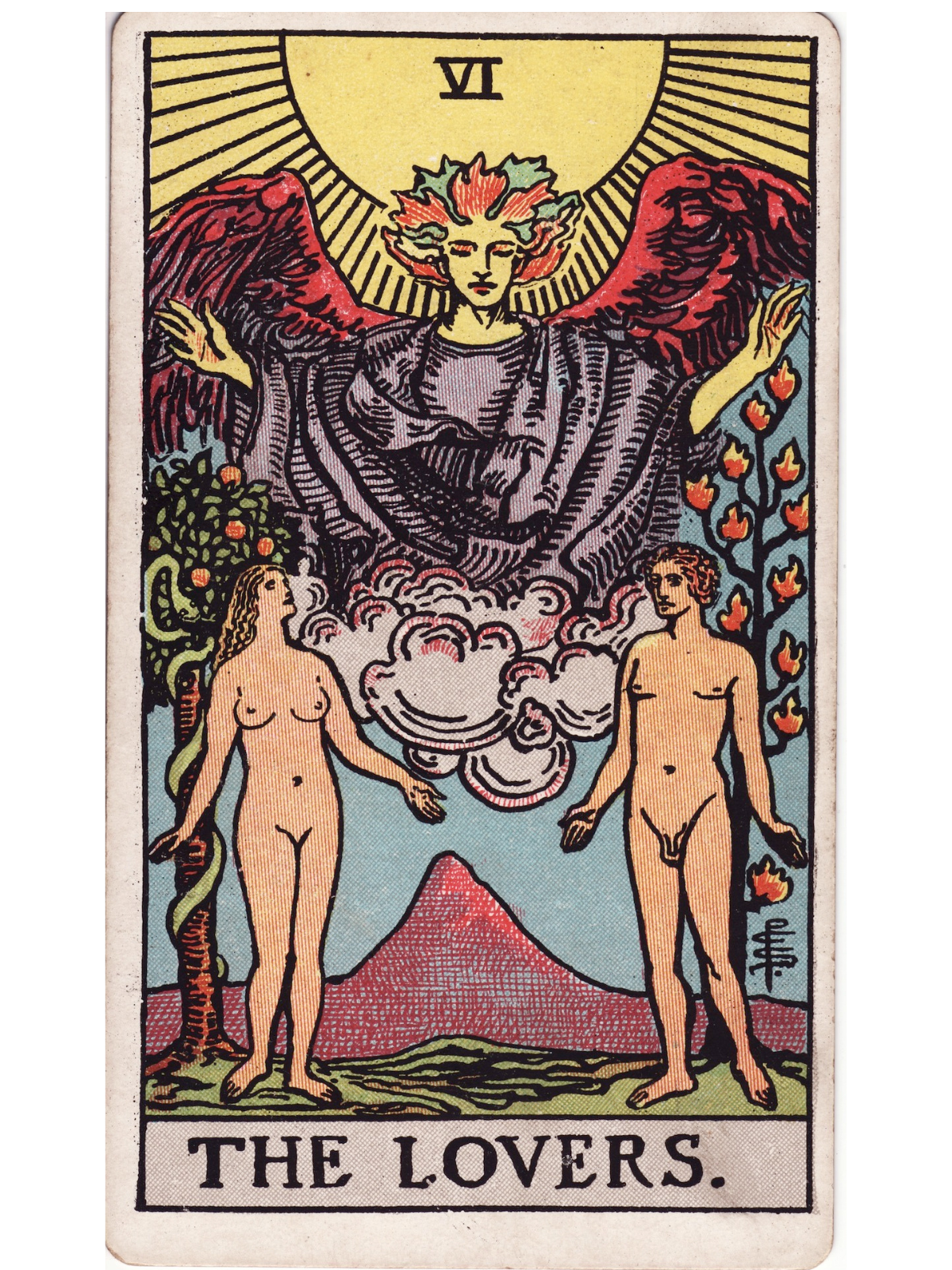
The Lovers, card 6 of the Major Arcana. Love, harmony, and the choices that reveal who we truly are.
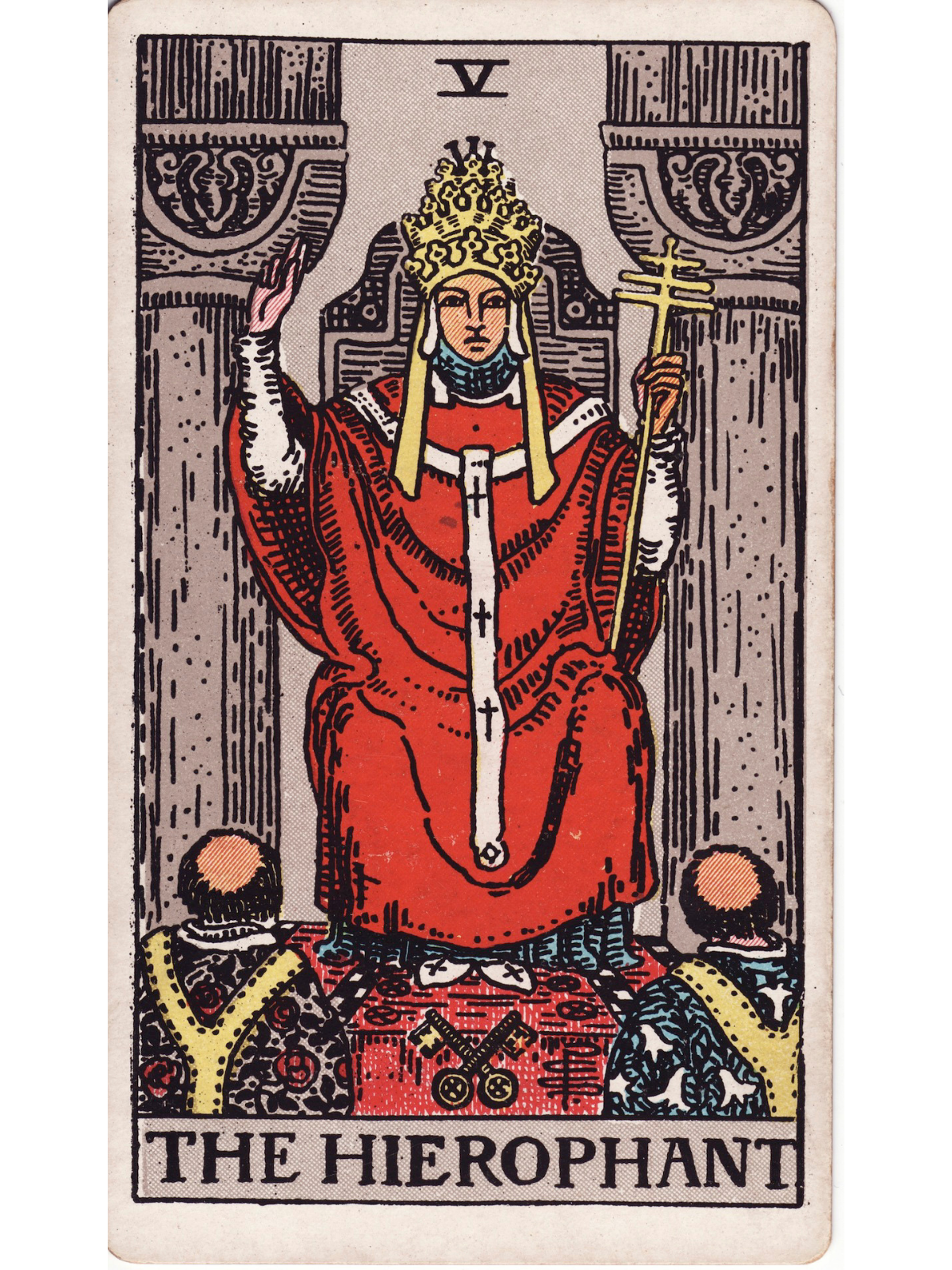
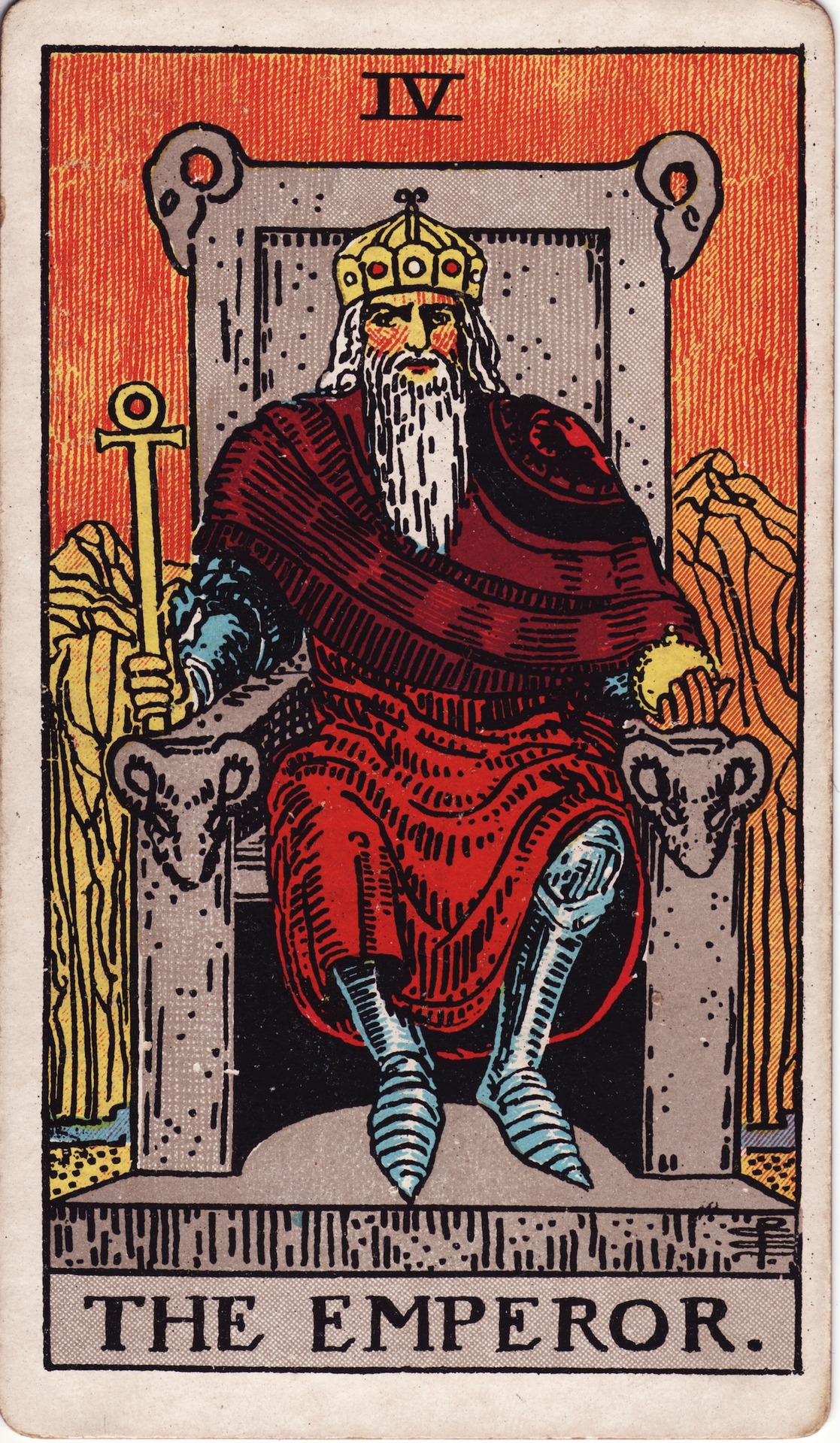
This post continues our journey through the Major Arcana, one card at a time. If you have not read the Major Arcana overview yet, that is a good place to start before diving into individual cards. So far, The Fool has stepped into the unknown, The Magician has discovered his tools, The High Priestess has taught us to listen within, The Empress has shown us how to nurture growth, and The Emperor has built structure that lasts. Most recently, The Hierophant taught us to learn from the wisdom of others. Now we arrive at card six, The Lovers, where for the first time, The Fool must make a choice that is entirely his own. As always, everything here follows the Rider-Waite tarot.
The Card at a Glance
- Number: 6
- Keywords: Love, union, harmony, partnership, choices, alignment of values
- Element: Air
- Reversed Keywords: Disharmony, imbalance, misaligned values, difficult choices, disconnection
- Yes or No: Yes
What You See in the Card
A man and a woman stand unclothed in a green, fertile landscape. Above them, an angel with outstretched arms and wide wings appears in a cloud, wearing a purple robe, with a bright sun shining behind. Behind the woman stands a tree heavy with fruit, with a serpent wrapped around its trunk. Behind the man stands a tree whose branches end in twelve small flames. Between the two figures, in the distance, rises a tall mountain. The man looks toward the woman, and the woman looks up toward the angel.
After the formal temple of The Hierophant, The Lovers takes us back outside into an open, natural world. There are no robes, crowns, or rules here, just two people standing honestly before each other and before something greater. At first glance, it looks like a card only about romance. Look a little longer, and you start to see it is really a card about choice: the decisions we make from the heart that shape who we become.
The Symbolism, Piece by Piece
The two figures. The man and woman stand unclothed, with nothing to hide. This openness represents honesty, vulnerability, and trust. True love and true choices both require us to show up as we really are.
The angel. The angel above them is often identified as Raphael, the angel of healing. With arms spread wide, the angel blesses the couple and represents a higher guidance that watches over the union. In the language of tarot colors, the angel’s purple robe speaks to spiritual wisdom and higher awareness.
The sun. The bright sun behind the angel brings warmth, clarity, and divine blessing. In Part 8 of my Tarot Symbolism Series on celestial symbols, the sun speaks to light, truth, and vitality. Nothing in this card is hidden in shadow.
The cloud. The angel appears in a cloud, a reminder that higher guidance often arrives in ways that are not fully clear. In Part 4 of my Tarot Symbolism Series on clouds and weather, clouds can point to the spiritual realm meeting the earthly one.
The tree with fruit and the serpent. The tree behind the woman, with its fruit and serpent, recalls the Tree of Knowledge from the Garden of Eden. In Part 5 of my Tarot Symbolism Series on animals, the serpent speaks to temptation, wisdom, and transformation. This tree represents desire and the choices that come with it. Temptation is part of every meaningful decision.
The tree of flames. The tree behind the man carries twelve flames, often linked to the twelve signs of the zodiac. It is commonly read as the Tree of Life, representing passion, spirit, and the eternal. In Part 6 of my Tarot Symbolism Series on plants and flowers, trees speak to growth and deep roots. Together, the two trees show the balance between earthly desire and spiritual purpose.
The gazes. In Part 3 of my Tarot Symbolism Series on direction and body language, where a figure looks tells us a great deal. The man looks to the woman, and the woman looks to the angel. This is often read as the conscious mind looking to the heart, and the heart looking to the spirit for guidance. Each part of us has something to offer the others.
The mountain. The tall mountain between them represents the challenges a couple faces together, and the higher goals they can reach as partners. It also reminds us that every choice leads somewhere, and the path ahead will require effort.
Why Six Matters: The Numerology of The Lovers
In Part 1 of my Tarot Symbolism Series on numerology, the number six carries the energy of harmony, love, balance, and responsibility. After the restless change of Five, Six brings things back into balance. In the Minor Arcana, the Sixes often speak of generosity, healing, cooperation, and peace returning after a struggle.
The Lovers embodies this harmony in its fullest form. Two separate people come together in balance, each bringing something to the union. Six is also the number of home, family, and caring for others, which is why The Lovers often speaks to commitment and shared responsibility.
There is also a lovely connection to The Hierophant. In card five, two figures knelt before a teacher, receiving wisdom from outside themselves. In card six, two figures stand before an angel, but this time the choice is theirs alone. The Lovers marks the moment when The Fool stops following someone else’s rules and begins choosing by his own heart and values.
The Lovers Upright
When The Lovers appears upright in a reading, it often points to love, partnership, and deep connection. This might be a romantic relationship, a close friendship, or a meaningful business partnership. It speaks to harmony, attraction, and two people coming together in a way that feels right.
The Lovers is not only about who you love. It is about what you value. This card frequently shows up when an important choice is in front of you, one that asks you to decide what matters most. The best choice is the one that lines up with your heart and your values, even if it is not the easiest one.
The Lovers can also speak to self-love and inner harmony. Before we can choose well with someone else, we have to know and accept ourselves.
The Lovers Reversed
Reversed, The Lovers’ energy tends to show up in one of two ways, and your intuition along with the surrounding cards will help you sense which one applies. If you are still getting comfortable with reversals, my post on reading both sides of the card is a good companion to this section.
The first is disharmony in a relationship. This can point to imbalance, poor communication, mismatched values, or a connection that has lost its spark. It may also point to temptation or a choice that puts a relationship at risk. The reversed Lovers often asks, “Are you and this person truly on the same path?”
The second is misalignment within yourself. This is when your choices do not match your values, or when you are avoiding an important decision. It can point to inner conflict, self-doubt, or living in a way that does not feel true to who you are. Sometimes the reversed Lovers is simply a call to come back home to yourself.
The Lovers in Love, Career, and Finances
Love
For someone single, The Lovers is one of the strongest signs of a meaningful new romance or a soulmate-level connection. In an existing relationship, it points to deep commitment, harmony, and a bond built on shared values. It may also signal a decision about taking the relationship to the next level. Reversed, it can point to conflict, an imbalanced partnership, temptation, or a relationship facing a crossroads.
Career
In career readings, The Lovers often points to a meaningful partnership, collaboration, or a decision about your path. It encourages you to choose work that aligns with your values, not just your paycheck. It can also signal strong teamwork and good working relationships. Reversed, it may suggest conflict with a coworker or partner, or a job that no longer fits who you are.
Finances
Financially, The Lovers often points to a choice. You may be weighing two options, and this card asks you to decide based on your long-term values rather than short-term temptation. It can also point to shared finances or a financial partnership. Reversed, it may caution against impulsive spending, money disagreements with a partner, or financial choices that conflict with your goals.
Is The Lovers a Yes or No Card?
Upright, The Lovers is a yes, especially for questions about love, partnership, and choices that come from the heart. Its yes comes with a reminder to make sure your decision lines up with your values.
Reversed, The Lovers leans toward no, or more accurately, not until things are in better balance. It suggests looking closely at whether your heart, your values, and your choices are truly in agreement.
When The Lovers Shows Up in Your Reading
Because The Lovers is a Major Arcana card, its appearance signals that love, connection, or an important choice is playing a meaningful role in your situation. Pay attention to where it lands in a spread. In a past position, it may point to a relationship or decision that shaped where you are now. In a present position, a choice or connection is in front of you right now. In a future or outcome position, love, harmony, or an important decision is on its way.
Here are a few questions to sit with when The Lovers comes up for you:
- What choice is in front of me right now, and what does my heart say?
- Are my relationships aligned with my values?
- Where do I need more honesty and openness in my connections?
- How can I show myself the same love I offer others?
Final Thoughts
The Lovers reminds us that love is more than a feeling. It is a choice we make again and again, guided by our hearts and our values. After The Hierophant shows us the wisdom of tradition, The Lovers asks us to decide for ourselves what we truly believe and who we truly want to be. When this card appears, it invites you to choose with an open heart, stay true to yourself, and trust that the right path is the one that brings you into harmony.
Standing at a Crossroads of the Heart?
If you are facing a choice in love or life and want some clarity about which path feels right, I would love to read for you. You can order a tarot card reading by email anytime. Also, please don’t forget to like, follow, share and subscribe.
Coming Up Next
Next time, we’ll meet The Chariot, card seven, and explore what it means to move forward with determination, willpower, and focus.
Has The Lovers ever shown up when you were facing an important choice? I’d love to hear about it in the comments.
Kim’s Esoteric Tarot Journals
Tarot readings are intended for adults age 18 and older and are provided for entertainment and personal reflection. Tarot should not replace professional medical, legal, mental health, or financial advice.
© 2026 Kim’s Esoteric Tarot Journals. All rights reserved.
 Kim's Esoteric Tarot Journals
