
Monthly Archives: September 2026

Tarot Symbolism Series: Part 10 – Objects

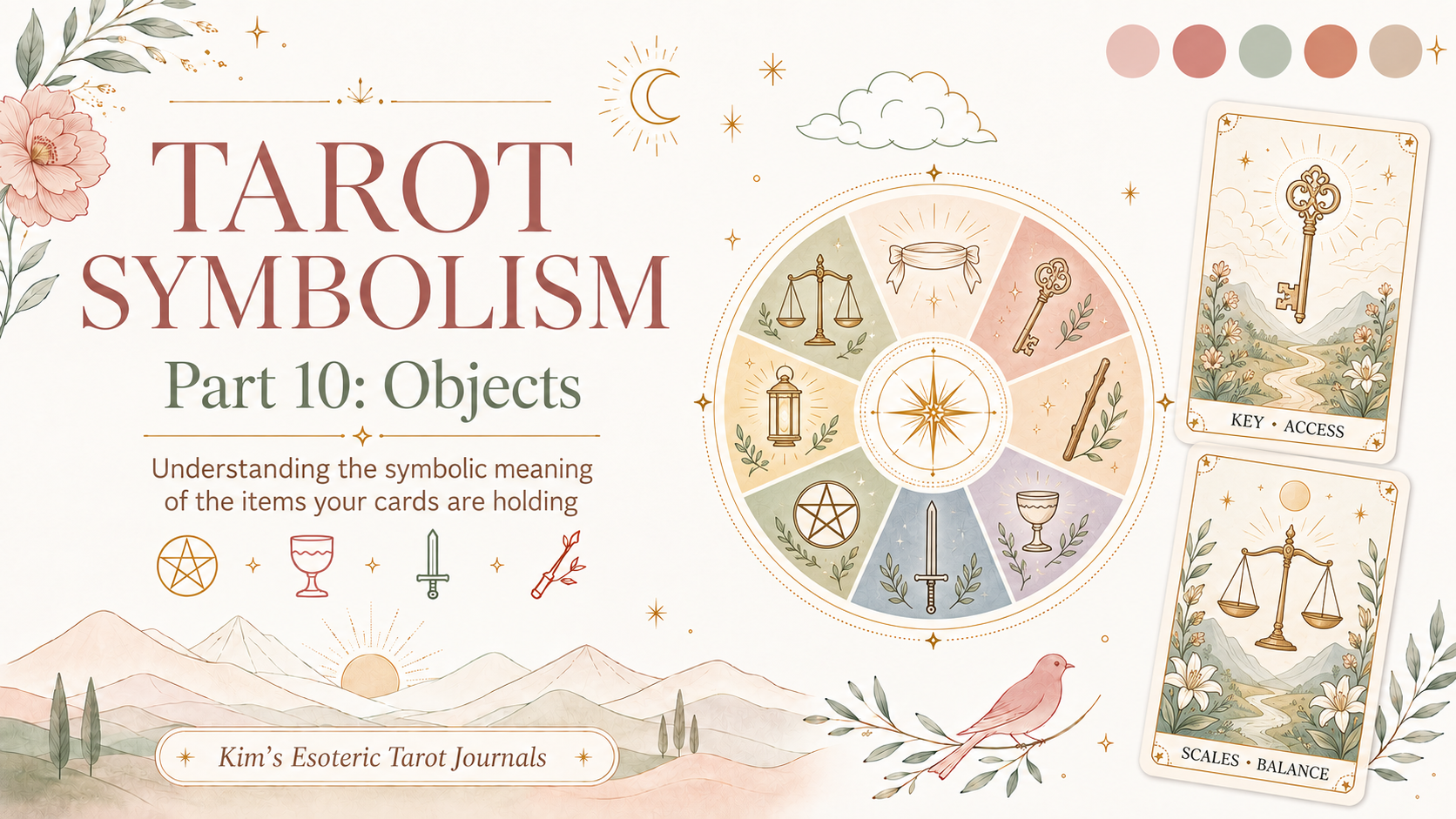
Tarot Symbolism Part 10 graphic featuring symbolic objects including a key, scales, wand, cup, sword, pentacle, blindfold, and lantern.

Tarot Symbolism 110: The Items Your Cards Are Holding

Nine layers of tarot symbolism are now in place. Today we are looking at objects: the specific items that figures hold, carry, or that appear as central features of a scene throughout the Rider-Waite deck. Objects are one of the most direct and precise forms of symbolic communication in tarot. Unlike color or clouds and weather, which set a tone, or direction and body language, which describes a relationship, an object usually means one thing with very little ambiguity. A set of scales means justice and balance. A blindfold means something is not being seen. A key means access to something locked. The specificity is the point.

This is also the layer where the four suits reveal themselves most literally. The wand, the cup, the sword, and the pentacle are all objects before they are symbols. When you hold the Ace of any suit, you are looking at that suit’s object in its purest, most essential form, the thing stripped of any surrounding narrative and presented simply as what it is. Learning what each suit’s object means at its core gives you a foundation that carries through every card that object appears in.

Objects as the Most Literal Layer

Every other layer of symbolism in this series has required some interpretation. A blue sky might mean calm, or it might mean something is being suppressed. A figure facing left might be retreating, or it might be reflecting. Color, atmosphere, and body language all require you to read them in context before their meaning settles.

Objects tend to be more fixed. The Hermit carries a lantern because he is a source of light for those still in the dark. The Justice card carries scales because the situation requires an honest weighing of what is true. The Wheel of Fortune holds a wheel because fate operates in cycles that no individual controls. You still read objects in context, but they give you a more stable anchor than most other symbolic elements. When an object appears in a card, it is almost always doing exactly what that object does in the real world, just at a symbolic level.

Objects Reference

Here is a quick reference for the objects most commonly found in Rider-Waite tarot cards and what each one generally brings to a reading.

ObjectCore EnergyGeneral Meaning
KeyAccessOpening what is locked, the answer to a question, or permission to enter something new
ScalesJusticeBalance, fairness, weighing of options, and the demand for an honest reckoning
LanternGuidanceIllumination in darkness, a small but steady light, and the wisdom to find the way forward
Staff or wandAuthorityPersonal power, direction of will, and the tool through which energy is channeled
SwordTruthClarity, intellect, conflict, and the double edge of knowing something precisely
Cup or chaliceFeelingWhat is being held emotionally, offered to another, or received from outside
Pentacle or coinValueMaterial worth, resources, the tangible result of effort, and what is being exchanged
Scroll or bookKnowledgeRecorded wisdom, things written and therefore fixed, and the authority of what is known
TorchPassionActive fire, the light carried forward, and energy that illuminates as it moves
HourglassTimeThe passage of time, urgency, a situation with a finite window, and what cannot be rushed
WheelCyclesFate in motion, the turning of fortune, and the inevitability of change over time
TowerStructureEstablished systems, things built over time, and what happens when foundations are tested
BlindfoldDenialDeliberate refusal to see, self-imposed limitation, or a situation requiring sight turned inward
Chains or bondsRestrictionLimitation, obligation, bondage that may be real or self-imposed, and what holds a situation in place
MirrorReflectionSelf-knowledge, truth seen directly, and the confrontation with what is actually there
WreathHonorAchievement recognized, a cycle completed with distinction, and the reward of sustained effort
RoseDesireBeauty and passion, the thing worth reaching for, and the thorns that come with it
Banner or flagDeclarationA position taken openly, victory announced, and the willingness to be seen for what one stands for

Quick Examples

The Hermit holds both a lantern and a staff. The lantern is raised, casting light ahead of him rather than around himself, which tells you the light is meant for others, not just for his own navigation. The staff supports him but also marks him as a traveler, someone in motion through difficult terrain. Together the two objects tell the card’s story more efficiently than almost any other detail in the image: a wise figure who has done the interior work and now offers what he found to those who are ready to receive it.

Justice holds scales in one hand and a raised sword in the other. The scales represent the act of weighing: nothing decided until everything has been considered. The sword represents the act of cutting through to the truth once the weighing is done. The two objects work together as a sequence. First the scales, then the sword. Fair consideration, then decisive clarity. One without the other would tell an incomplete story, and the card holds both on purpose.

The Two of Swords shows a seated figure holding two crossed swords in front of her chest, with a blindfold over her eyes. Three objects working together: the blindfold preventing sight, the crossed swords preventing passage, and the posture of the arms preventing anything from getting through. Every object in the card reinforces the same message from a different angle. The situation is blocked in every direction, and the figure is the one doing the blocking.

The Ace of Cups shows a single ornate cup overflowing with five streams of water, a dove descending into it from above, and a hand emerging from a cloud to offer it. The cup is the object, and it is doing everything cups do in their most essential form: receiving, holding, and offering feeling. The overflowing streams tell you there is more here than can be contained. The dove tells you the source is divine. The offering hand tells you this is available, not yet taken. That one object, read carefully, delivers the entire meaning of the card.

How to Use This When You Read

When an object appears in a card, take a moment to read it on its own before you fold it into the larger card meaning:

•  What is the object, and what does it do in the real world?

•  What is the figure doing with the object: holding it, offering it, ignoring it, wielding it?

•  Is the object in good condition, damaged, or incomplete?

•  Is the same object appearing in more than one card in your spread?

•  Does the object reinforce the card’s traditional meaning, or does it add a layer the name alone does not capture?

What a figure does with an object matters as much as what the object is. A sword raised in triumph and a sword pointed at a prone figure are the same object doing completely different things. A cup being offered openly and a cup being clutched tightly to the chest are the same object in entirely different emotional registers. Always read the action alongside the item.

Objects are meant to add precision and clarity to a reading, not override the card’s traditional meaning. Keep the question, the position in the spread, and your intuition in the mix. Objects rarely lie and rarely speak in riddles. What they say, they say directly.

Coming Up Next

We are in the home stretch of this series. Next we look at landscapes and buildings: the mountains, towers, bridges, paths, rivers, and structures that form the world these figures inhabit. This is one of the richest symbolic layers in the deck because the landscape a figure stands in says as much about their situation as anything they are holding or wearing. After landscapes and buildings, the series closes with Part 12: Repeated Symbols.

Have you started paying attention to the objects in your cards? If so, what are your thoughts?

Tarot readings are intended for adults age 18 and older and are provided for entertainment and personal reflection. Tarot should not replace professional medical, legal, mental health, or financial advice.

© 2026 Kim’s Esoteric Tarot Journals. All rights reserved.
Tarot Symbolism Series: Part 9 – Clothing

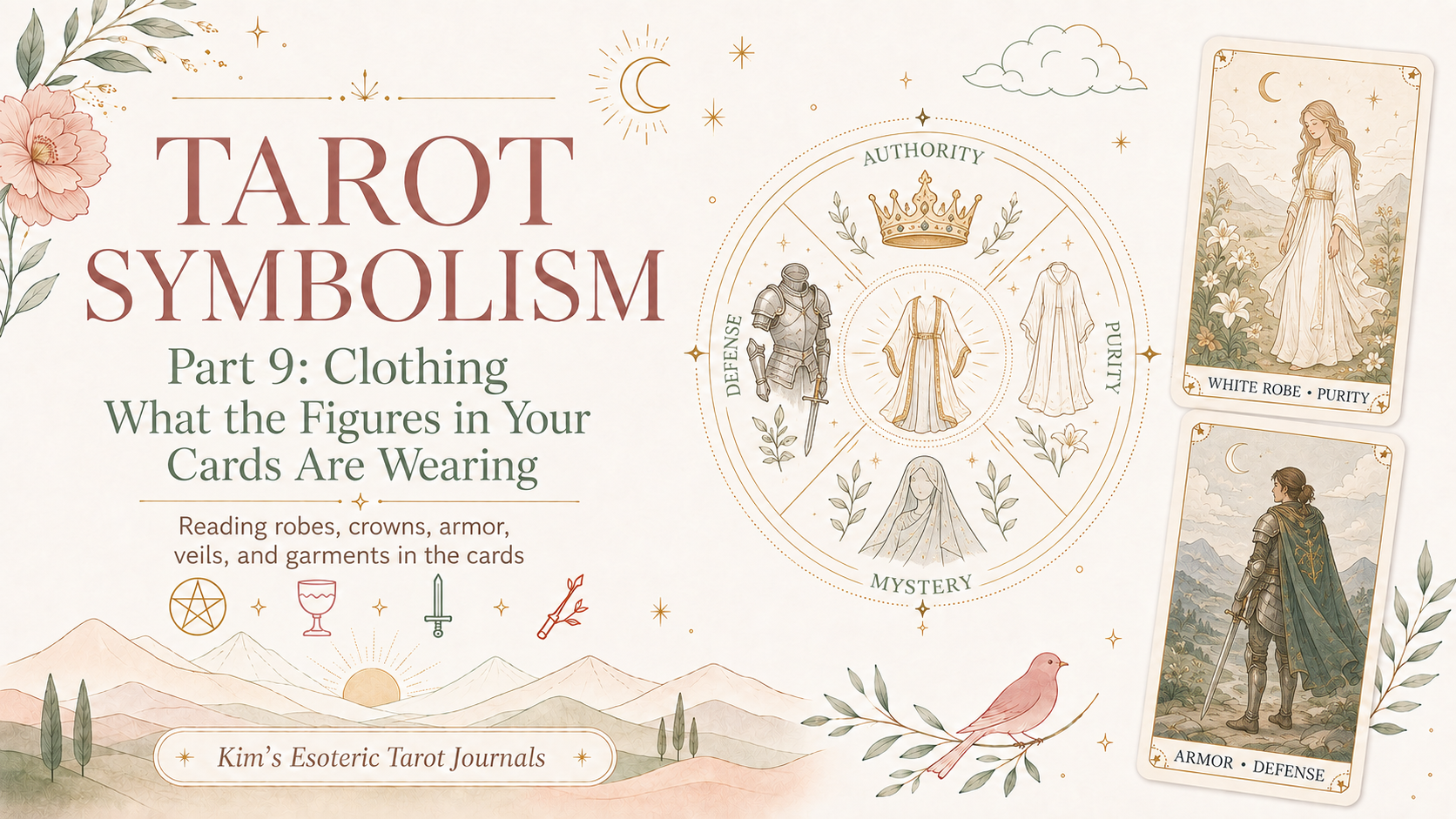
The image introduces Part 9 of the Tarot Symbolism series by showing how clothing and garments can add meaning to tarot cards. It highlights how details such as robes, crowns, armor, and veils can reveal a figure’s role, energy, and character.

Tarot Symbolism 109: What the Figures in Your Cards Are Wearing

Eight layers of tarot symbolism are now in place. Today we are looking at clothing: the robes, crowns, armor, veils, and garments worn by the figures throughout the Rider-Waite deck. Clothing in tarot works exactly the way it works in real life. It is the first thing you see, it tells you something about who a person is before they open their mouth, and it is chosen with intention every single time.

In the Rider-Waite deck, nothing a figure wears is accidental. The color of a robe connects to the color symbolism we covered in Part 2. The symbols decorating a garment carry their own layer of meaning. Whether a figure is armored or unrobed, crowned or plain, heavily draped or simply dressed: all of it is communicating something about their nature, their role, and the energy they bring to the card. Once you start reading clothing, you will find it adds a specific kind of character detail that no other layer of symbolism provides.

Clothing as Character

I think of clothing in tarot the way I think about costuming in theater. A costume does not just dress an actor. It tells the audience who this person is in the world of the story, what role they occupy, what forces they align with, and sometimes what they are hiding. The same logic applies here. A figure in heavy armor is not the same person as a figure in a plain white robe, even if they are standing in the same landscape holding the same object. The garment defines the character as much as anything else in the card.

Color is the first thing to read in any garment, and here the work you did in Part 2 pays off directly. A red cloak and a blue robe are not just different clothes. They are different energies dressed up as fabric. After color, look at the cut and weight of the garment: is it elaborate and layered, or plain and unadorned? Is it protective, like armor, or open and unguarded? Is there anything printed, embroidered, or patterned into the fabric itself? Each of those details is a sentence in the card’s story.

Clothing Reference

Here is a quick reference for the garments and clothing details most commonly found in Rider-Waite tarot cards and what each one generally brings to a reading.

Garment or DetailCore EnergyGeneral Meaning
CrownAuthorityRulership, divine right, mastery, and power that has been earned or bestowed
Crown of starsSpiritual powerAuthority that comes from a higher source rather than earthly position
Wreath on headAchievementVictory, completion, and honor earned through effort
White robePurityInnocence, spiritual clarity, and intention not yet complicated by experience
Red robe or cloakPassionWorldly power, action, desire, and energy fully engaged with the material world
Blue robeTruthWisdom, calm authority, and alignment with higher knowing
Yellow robeIntellectMental energy, clarity of thought, and the life force of the mind
Patterned robeComplexityMultiple influences at work, layered identity, or a rich inner life
ArmorDefenseProtection, readiness for conflict, and the stance of someone braced for opposition
Plain or simple dressHumilityGroundedness, absence of pretension, and situations stripped of artifice
Naked or unclothedVulnerabilityComplete openness, innocence before experience, or the truth without disguise
Hood or veilConcealmentHidden identity, mystery, things not yet revealed, or deliberate withdrawal
Belt or girdleMasteryControl of the self, discipline, and energy held in check rather than released
Boots or sandalsReadinessPrepared to move, grounded in the physical world, and ready for the journey
CloakProtectionSomething covering or concealing the self, shelter, or the wisdom of keeping something private
Symbols on clothingIdentityThe specific symbols decorating a garment reveal the wearer’s nature, allegiances, or inner qualities

Quick Examples

The Magician wears a white robe beneath a red outer cloak. The white robe speaks to purity of intention and the spiritual foundation beneath his work. The red cloak over it speaks to active engagement with the material world, the willingness to step into action and use what he knows. That layering is the whole card in miniature: spiritual grounding expressed through worldly action. Neither color alone would tell the full story. Both together do.

The Emperor is dressed almost entirely in armor beneath his red robes. The armor tells you he is prepared for opposition and has been tested before. The red robes over the armor tell you that passion and authority are what he presents to the world. But the armor underneath is the detail that matters most. He is not just a ruler sitting comfortably in power. He is someone who has had to defend it, and who remains ready to do so again.

The Fool wears a richly patterned robe decorated with flowers and symbols, bright and varied and seemingly without any unifying theme. That patterned complexity is the point. The Fool has not settled into any single identity or allegiance yet. His clothing is everything at once, which is exactly right for someone standing at the very beginning of the journey before any choices have narrowed the path.

The High Priestess wears a simple blue and white robe with a cross on her chest and a horned crown above. Her garments carry no excess. The blue robe signals calm wisdom and truth. The white beneath it signals purity. The cross on her chest marks the intersection of the material and the spiritual, which is precisely the threshold she guards. Her clothing is restrained because everything she knows, she holds in rather than displays.

How to Use This When You Read

When you look at a figure in a card, let their clothing tell you something before the card’s name or number does:

•  What is the dominant color of their garment, and how does that connect to the card’s energy?

•  Are they heavily dressed or lightly dressed, armored or open?

•  Is there patterning, embroidery, or symbols on the fabric itself?

•  Does the clothing match the situation the card describes, or does it complicate it?

•  Are multiple figures in the card dressed differently from each other, and what does that contrast say?

That last point is particularly useful in cards that show more than one figure. When two figures are dressed very differently, the contrast is almost always meaningful. In the Six of Swords, for example, the cloaked and hooded figure being ferried across the water carries the full weight of concealment and grief in her clothing, while the ferryman stands upright and unrobed, focused on the work of moving forward. Same card, two completely different sets of information delivered entirely through what each figure is wearing.

Clothing is meant to add character depth and role definition to a reading, not replace the card’s traditional meaning. Keep the question, the position in the spread, and your intuition in the mix. What a figure wears is who they are in the moment of that card. It is worth taking a moment to look them over before you move on.

Coming Up Next

Next we look at the objects that appear throughout the Rider-Waite deck: the keys, lanterns, scales, hourglasses, scrolls, and other items that figures carry or that appear in the scene. Objects are one of the most direct forms of symbolic communication in tarot because they are specific: a set of scales means something very precise, and it means the same thing every time it appears. After objects, the series closes with landscapes and buildings, and then repeated symbols.

Have you started reading the clothing in your cards? If so, what are your thoughts?

Tarot readings are intended for adults age 18 and older and are provided for entertainment and personal reflection. Tarot should not replace professional medical, legal, mental health, or financial advice.

© 2026 Kim’s Esoteric Tarot Journals. All rights reserved.
Tarot Symbolism Series: Part 8 – Celestial Symbols

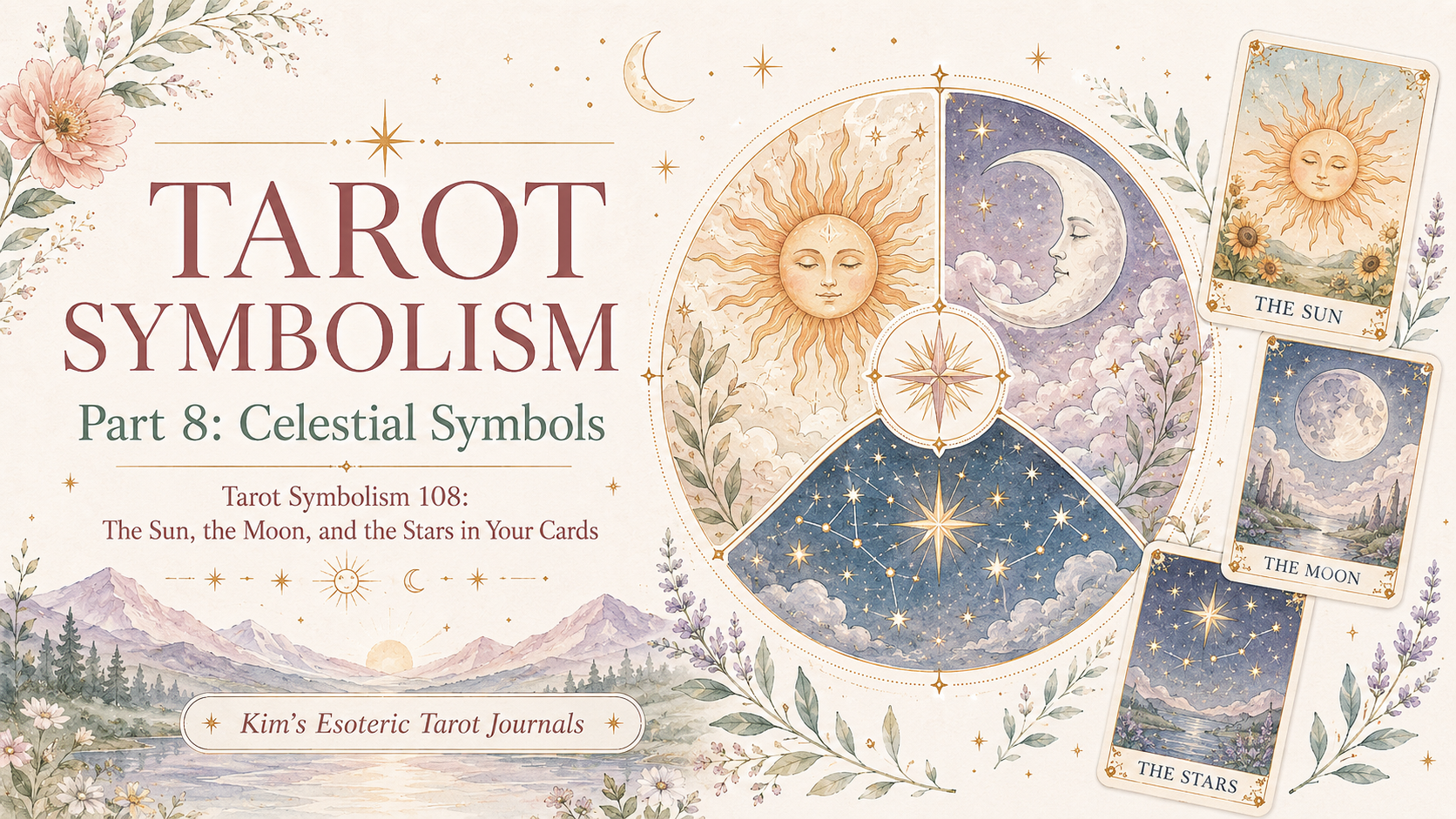
Image of tarot symbolism Celestial Symbols
Tarot Symbolism – Celestial Symbols

Tarot Symbolism 108: The Sun, the Moon, and the Stars in Your Cards

Seven layers of tarot symbolism are now in place. Today we are looking at celestial symbols: the sun, the moon, the stars, planetary glyphs, halos, and the other heavenly details that appear throughout the Rider-Waite deck. In Part 4 we covered the sky as atmosphere, focusing on clouds and weather and what they say about the emotional climate of a card. Celestial symbols are something different. They are not atmosphere. They are fixed points of meaning, and they carry a specific kind of authority that weather does not.

The sky in a card can change. A storm can clear. Clouds can part. But the sun, the moon, and the stars in tarot are not passing conditions. They are presences, and each one is placed exactly where it is for a reason. When a card carries celestial imagery, it is usually signaling something that operates beyond the immediate moment of the situation, something connected to larger cycles, divine influence, or a truth that exists independent of what the human figures in the card are doing.

Celestial Symbols Versus Atmospheric Conditions

It is worth being clear about the distinction between what we covered in Part 4 and what we are covering today, because the sky holds both and they work differently. Atmospheric conditions like storm clouds, clear skies, and rough water tell you about the emotional and situational climate surrounding the action in a card. They are contextual. They shift depending on where you are in a reading.

Celestial symbols carry a different weight. The sun in The Sun card is not commenting on the weather. It is the central presence of the card, a source of life and clarity that does not waver. The moon in The Moon card is not a passing cloud. It is an unreliable light casting shadows over an uncertain path. The stars in The Star card are not decoration. They are a promise. Celestial symbols tend to point toward something absolute, something that is true regardless of the moment the reading is happening in.

Celestial Symbols Reference

Here is a quick reference for the celestial symbols most commonly found in Rider-Waite tarot cards and what each one generally brings to a reading.

SymbolCore EnergyGeneral Meaning
The SunVitalityConsciousness, life force, clarity, success, and energy that sustains
The Moon: fullCompletionHeightened intuition, emotional fullness, and things coming to a peak
The Moon: crescentBecomingGrowth, new beginnings, and potential still in the process of forming
The Moon: waningReleaseLetting go, endings approaching, and energy beginning to withdraw
Stars: singleGuidanceA fixed point of hope, divine direction, or a sign worth following
Stars: manyPossibilityAbundance of hope, spiritual blessing, and the vast scope of what is available
Eight-pointed starRenewalBalance restored, cycles completing and beginning again, divine harmony
Twelve starsWholenessCompletion of a full cycle, all signs represented, nothing left out
Lightning boltRevelationSudden illumination, a truth striking fast, or a system breaking open
Halo or aureoleDivinitySacred energy, spiritual authority, and connection to a higher source
Crown of starsElevationSpiritual mastery, divine favor, and authority that comes from above
Planetary symbolsCosmic lawThe influence of a specific planet and the qualities it governs in astrology
RainbowCovenantPromise, hope after difficulty, and the bridge between the human and divine
Sun behind cloudsObscured truthClarity not yet available, something true but not yet fully visible

Quick Examples

The Star card is one of the most celestially rich cards in the entire deck. A large eight-pointed star sits at the center of the sky, surrounded by seven smaller stars. The large star represents renewed balance and divine harmony. The seven surrounding stars have been interpreted as the seven classical planets, the seven chakras, and the seven days of the week, depending on the tradition you are reading from. What they share across all of those interpretations is the same meaning: abundance of blessing, nothing withheld, hope restored in full. The star count in this card is not arbitrary. Twelve would mean something different. Seven surrounding one means something specific.

The High Priestess sits with a crescent moon at her feet and a crown that incorporates lunar phases. The crescent at her feet is a moon in its becoming stage, still growing toward fullness. Her crown shows the full cycle: waxing, full, and waning. She does not just represent intuition. She represents the full arc of what knowing something feels like, from the first sense that something is true, through the moment of complete clarity, and into the wisdom that comes after. The lunar imagery makes that arc visible in a way the figure alone could not.

The World card shows a dancing figure encircled by a wreath and surrounded in the four corners by four fixed signs: the bull, the lion, the eagle, and the angel, which correspond to Taurus, Leo, Scorpio, and Aquarius. These are the four fixed signs of the zodiac and the same figures that appear on the Wheel of Fortune. Their presence in both cards is not coincidence. In the Wheel they mark the turning of cycles. In the World they mark the completion of one. The cosmic framework is the same. The position within it has changed.

The Tower has a lightning bolt striking its crown. This is not weather. It is revelation, sudden and violent illumination that cannot be redirected or softened. The lightning bolt in tarot always carries that quality of a truth arriving faster than preparation allows. It does not ask permission. It does not build gradually. It arrives all at once, and whatever was standing before it arrived has to reckon with what the light reveals.

How to Use This When You Read

When a celestial symbol appears in a card, pause and consider what it is doing in the scene:

•  Is the sun, moon, or a star the central focus of the card, or is it a detail in the background?

•  What phase is the moon in, and what does that phase suggest about where the situation is in its cycle?

•  How many stars are present, and does the number connect to a numerological meaning?

•  Is there a halo, crown of stars, or planetary symbol present that signals divine authority or cosmic influence?

•  Does the celestial imagery feel like a blessing, a warning, or a neutral marker of where things stand?

Celestial symbols almost always point toward the larger context surrounding a situation rather than the immediate action. When they appear prominently in a reading, they are often asking you to step back from the day-to-day details and consider what is actually at work beneath the surface. A card heavy with celestial imagery is usually one where the situation has larger implications than it might appear to on first look.

Celestial symbols are meant to add spiritual depth and cosmic context to a reading, not override the card’s traditional meaning. Keep the question, the position in the spread, and your intuition in the mix. The stars are always there. It just takes a moment to look up and read them.

Coming Up Next

Next we come back down to earth and look at clothing: what the robes, armor, crowns, and garments worn by the figures in the Rider-Waite deck reveal about who they are and what they represent. After clothing, the series wraps up with objects, landscapes and buildings, and repeated symbols.

Have you started noticing the celestial details in your cards? If so, what are your thoughts?

Tarot readings are intended for adults age 18 and older and are provided for entertainment and personal reflection. Tarot should not replace professional medical, legal, mental health, or financial advice.

© 2026 Kim’s Esoteric Tarot Journals. All rights reserved.